

Decluttering Roadblocks and How to Solve Them

Decluttering often looks simple from the outside. Sort a space, remove what you do not need, and move on. In practice, it rarely works that way. Progress slows down, decisions get delayed, and the same items stay in place longer than expected.
Most of the time, the issue is not effort. It is the roadblocks that show up during the process. These moments interrupt momentum and make it harder to keep going.
Once you recognize the most common decluttering roadblocks, it becomes easier to move through them without getting stuck.
Why Decluttering Roadblocks Happen
Decluttering roadblocks usually appear when decisions become uncomfortable. Each item asks a question, and some of those questions are harder to answer than others.
A simple object can raise concerns about money, memory, future needs, or responsibility. When those concerns build up, the process slows down.
Instead of moving forward, people pause. That pause often turns into delay. Understanding where those pauses come from makes them easier to handle.
1. Not Knowing Where to Start
One of the most common decluttering challenges is the feeling that everything needs attention at once. Every room, every surface, every drawer competes for focus.
That makes it difficult to choose a starting point.
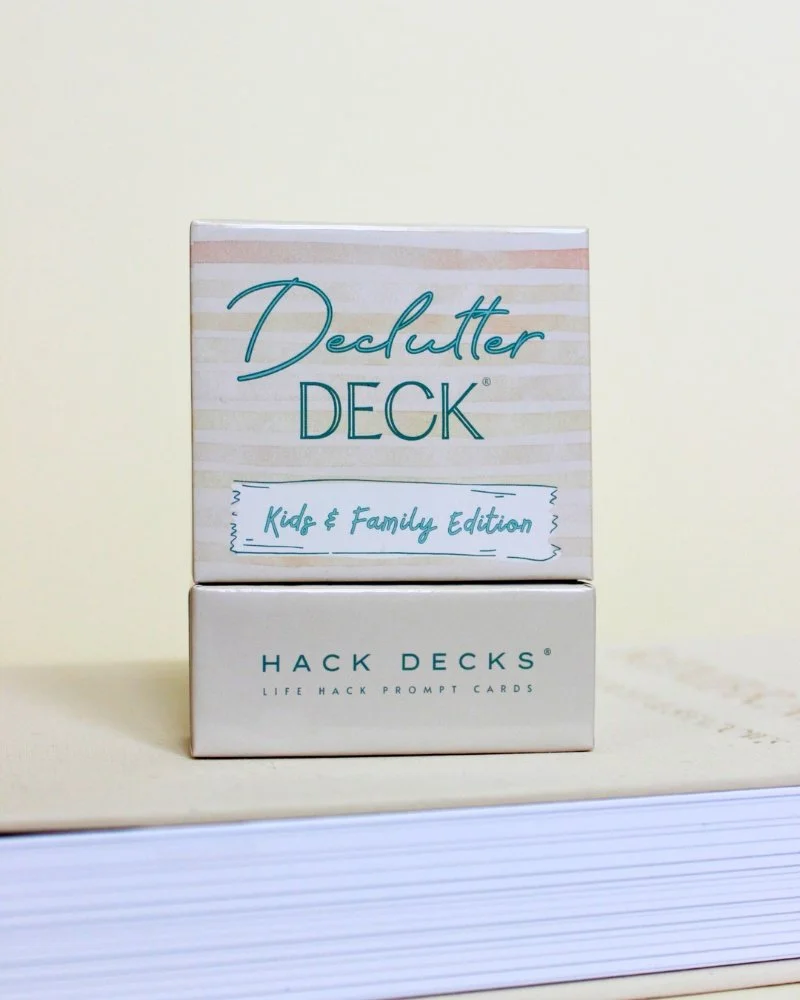
The solution is to reduce the scope. Start with a single drawer, a small surface, or one category. A clear boundary makes it easier to begin and easier to finish. If you need help, try our Declutter Deck to guide you to specific tasks.
2. Trying to Do Too Much at Once
Large decluttering sessions often begin with good intentions. The plan is to clear an entire room or even the whole house in one effort.
The problem is that energy and focus do not last long enough to support that plan.
Breaking the work into smaller sessions leads to better results. A short, focused effort repeated over time is more effective than a single large attempt.
3. Holding Onto Items Because of Cost
Money creates attachment. When something was expensive, it can feel wrong to let it go.
This is one of the most common decluttering problems. The thought is that keeping the item protects the investment.
The cost has already happened. Keeping the item does not change that. What it does change is the space it occupies and the attention it continues to take.


4. Feeling Attached to Sentimental Items
Sentimental items are often the hardest to sort through. They represent people, experiences, and periods of life that feel important.
Letting go can feel like losing part of that history.
Keeping a small number of meaningful items while releasing the rest helps balance memory with space. The meaning remains even when the number of objects is reduced.
5. Saving Items for “Someday”
Many items stay in a home because of a future plan. A project that might happen, an event that might come up, or a need that might appear.
This pattern creates storage for possibilities rather than for current use.
Focusing on what supports your life today helps reduce this type of clutter. Most future needs can be handled when they arise.
6. Avoiding Waste
The desire to avoid waste can keep items in place long after they stop being useful.
Letting something go can feel like contributing to a problem rather than solving one.
In reality, unused items already represent a form of waste. Passing them along through donation or recycling allows them to serve a purpose again.
7. Lack of Time
Decluttering often feels like something that requires large blocks of time. When those blocks are not available, the process gets postponed.
Small windows of time are enough. Ten to twenty minutes can be used to clear a drawer, a shelf, or a small category.
Consistent small efforts create steady progress.
8. Trying to Do It Alone
Decluttering can feel isolating, especially when the task becomes overwhelming.
Support changes the experience. A friend, family member, or professional can provide accountability and perspective.
Sharing the process often makes it easier to continue.
How to Solve Decluttering Roadblocks in Real Life
Recognizing decluttering roadblocks is only part of the process. The next step is adjusting how you respond to them.
Start small and stay consistent. Focus on one space or one category at a time. Make decisions based on how you live now rather than how you lived in the past.
Accept that decluttering is a skill that improves with practice. Each decision builds confidence for the next one.
Building a Decluttering Mindset That Lasts
Overcoming decluttering roadblocks changes how you approach your home over time.
Instead of waiting for the perfect moment to start, you begin to see small opportunities to make progress. A drawer can be cleared while dinner is cooking. A shelf can be sorted in a few minutes.
These small actions add up. The home becomes easier to maintain because clutter no longer has time to build.
The process becomes part of daily life rather than a task that gets postponed.
