

How to Decide What to Keep and What to Let Go When Decluttering

How to decide what to keep and what to let go is the question that sits at the center of every decluttering effort. The physical work of sorting objects rarely takes the most energy. The real challenge comes from the decisions attached to those objects.
Each item carries a small story. A purchase that once felt exciting. A gift from someone important. A tool connected to a project that never quite happened. When hundreds of these small stories accumulate, the act of deciding what stays and what leaves begins to feel emotionally complicated.
Most people assume the solution is better organization. They buy bins, baskets, or storage systems hoping that everything will finally have a place. In reality, organization works best after decisions are made. The first step is deciding what truly deserves space in your home.
Once that process becomes clearer, decluttering begins to feel far less overwhelming.
Why Decluttering Decisions Feel So Difficult
Decluttering decisions feel difficult because they rarely involve objects alone. They often involve identity, memory, responsibility, and expectation.
An item may represent who you thought you would become. A set of craft supplies might reflect a hobby you hoped to pursue. Professional clothing might reflect a career chapter that has already passed. Kitchen tools might represent a version of cooking you imagined having more time for.
Letting go of those objects can feel like letting go of the idea behind them.
Another reason decluttering decisions become difficult is the fear of making a mistake. People worry they will discard something only to need it later. This hesitation encourages people to postpone decisions indefinitely.
Understanding these emotional layers helps make the process more realistic. Decluttering is not simply about cleaning a space. It involves adjusting how we think about the things we own.
The Role of Purpose in Decluttering
One of the most effective ways to decide what to keep when decluttering is to look at purpose. Every object in a home either serves a clear purpose or it does not.
Purpose can take several forms. Some items support daily routines. Kitchen utensils, basic clothing, and essential tools fall into this category. Other items support personal enjoyment, such as books, hobbies, or decorations that bring a sense of comfort.
The difficulty appears when objects no longer serve a purpose but remain in the home anyway. They might represent past interests or plans that never developed. When that happens, the item begins to function more as storage than as support for daily life.
Asking whether an object still has a purpose today helps shift the focus from the past to the present.
A Practical Process for Deciding What to Keep
When people struggle with how to decide what to keep and what to let go, it often helps to follow a consistent process. Structure reduces the emotional pressure of making hundreds of individual decisions.
Step 1: Look at one small category at a time
Trying to evaluate an entire room at once can quickly become overwhelming. Instead, focus on a single category of items.
Examples include shirts, kitchen utensils, office supplies, or books. Sorting similar items together makes patterns easier to see.
You may discover that you own far more of something than you realized.
Step 2: Handle each item individually
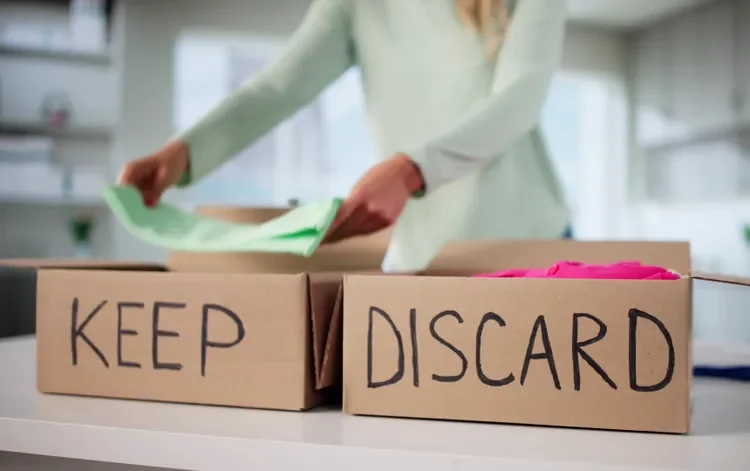
Take each item in your hands before deciding whether it stays or goes. Physical contact often changes how an object feels. Does it spark joy?
Some items immediately feel useful or meaningful. Others feel neutral or unnecessary. Handling the object helps clarify that reaction.
Step 3: Ask whether the item supports your current life
Many items remain because they once served a role in your life. That role may no longer exist.
Look at whether the object supports your life today. If it does, keeping it makes sense. If it does not, the object may simply represent a previous chapter.
Step 4: Notice duplicates
Duplicates are one of the most common sources of clutter. Extra utensils, extra notebooks, extra cables, extra clothing items quietly accumulate.
Keeping the best version of something while letting go of extras often simplifies the process.
Step 5: Accept that every home has limits
Every home has a natural capacity. Cabinets, closets, and drawers can only hold so much before they become difficult to use.
Recognizing those limits helps guide decluttering decisions. When space becomes crowded, something has to leave before something new arrives.


Understanding the Emotional Side of Letting Go
How to let go of clutter often depends on recognizing the emotions attached to objects. These emotions are normal and appear in nearly every home.
Sentimental items carry memories of people, places, and events. Gifts carry the relationship with the person who gave them. Expensive purchases carry the reminder of money already spent.
Acknowledging these emotions helps reduce their power. Instead of pretending they are not present, you can recognize them while still deciding whether the object belongs in your home.
Memories remain even when the object leaves.
What to Keep When Decluttering
While many decluttering conversations focus on letting go, deciding what to keep is equally important. A simplified home should still support the way you live.
Items worth keeping often fall into several categories.
Objects used regularly for daily tasks.
Tools that make your routines easier.
Clothing that fits your lifestyle and feels comfortable.
Personal items that bring genuine enjoyment or meaning.
The goal is not to remove everything from a space. The goal is to keep what supports daily living and remove what interferes with it.
Common Mistakes When Making Decluttering Decisions
Many people make decluttering decisions more difficult than they need to be. A few patterns tend to appear repeatedly.
One common mistake is attempting to declutter an entire house at once. Large projects often stall before they are finished.
Another mistake is keeping items because they might become useful in the future. While some preparation is reasonable, storing large numbers of hypothetical tools or supplies can create unnecessary clutter.
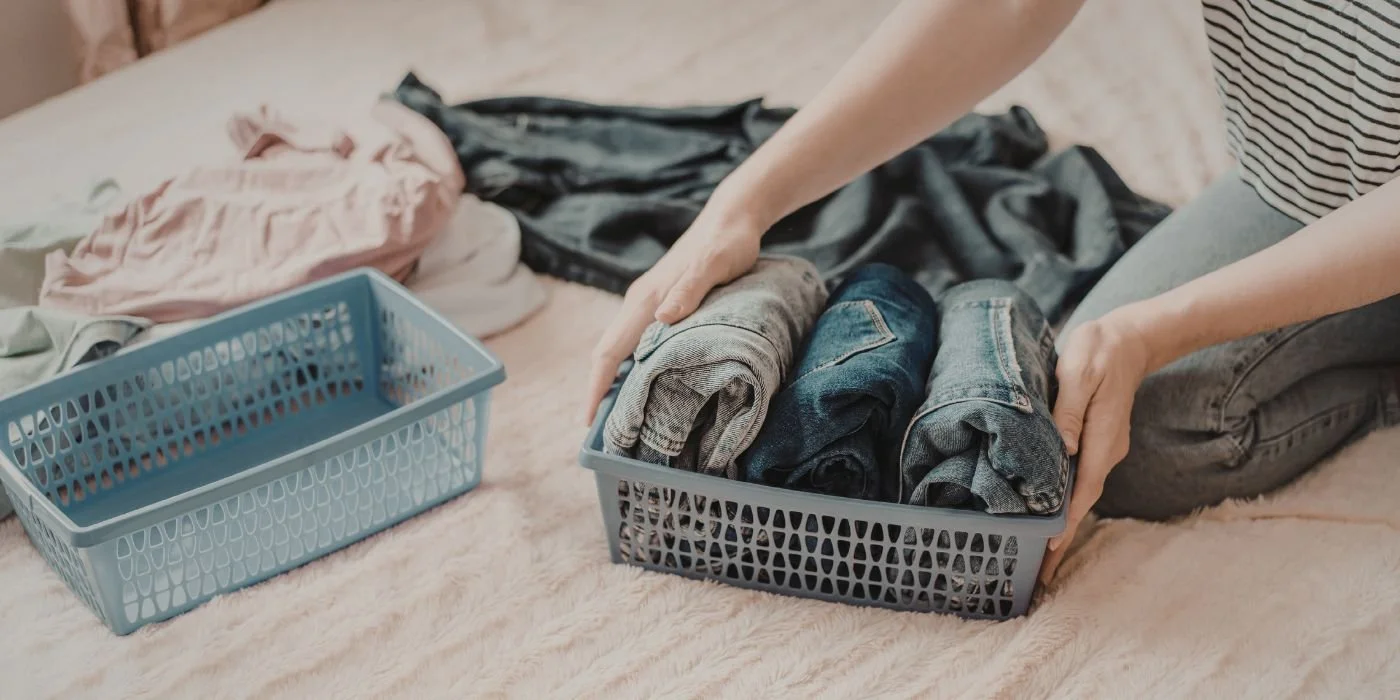
A third mistake involves focusing too heavily on storage solutions. Containers can help organize what remains, but they do not reduce the number of items in a space.
Decluttering works best when decisions come before organization.
Building Confidence in Decluttering Decisions
Confidence grows through practice. The more often you make small decluttering decisions, the easier they become.
Over time you begin to recognize patterns in what you use and what you ignore. Those patterns help guide future choices about what enters your home.
You may also notice that many items you once believed were essential never cross your mind again after they leave.
This experience builds trust in your ability to decide what belongs in your home.
A Home That Reflects the Life You Live Today
Learning how to decide what to keep and what to let go gradually changes the way a home feels. Spaces become easier to navigate. Storage areas become easier to maintain. Daily routines become smoother.
Decluttering is not about creating a perfectly empty environment. It is about shaping a space that supports the life you are actually living.
When objects earn their place through usefulness or meaning, the home begins to feel lighter and more manageable. The decisions that once felt difficult become part of an ongoing habit of living with intention. If you need help getting started, check out our Declutter Deck.
