

Why People Struggle to Declutter: 8 Real Reasons That Keep Homes Stuck

When you look at why people struggle to declutter, it usually has less to do with effort and more to do with what sits underneath the surface. Most homes are not filled with clutter because someone is careless. They are filled because decisions get delayed, emotions get tied to objects, and daily life moves faster than the time it takes to sort through it all.
Clutter builds slowly. A few items left out. A drawer that gets harder to close. A shelf that starts to feel crowded. Over time, those small changes stack together until the space begins to feel heavier than it should.
Understanding why decluttering is hard makes it easier to move forward. When you can see what is getting in the way, the process becomes more manageable.
The Real Reasons Decluttering Feels So Difficult
Decluttering challenges rarely come from the physical work alone. The act of moving items, sorting them, and putting them away is straightforward. The difficulty comes from the decisions attached to each object.
Every item carries a question. Do I keep this? Do I need this? What if I regret letting it go?
When those questions repeat hundreds of times, the process slows down. The reasons below show what is happening beneath those decisions.
1. You Don’t Know Where to Start
One of the most common decluttering problems is not knowing where to begin. When the entire home feels cluttered, every space competes for attention.
This creates hesitation. If you choose the wrong place to start, you worry that you are wasting time.
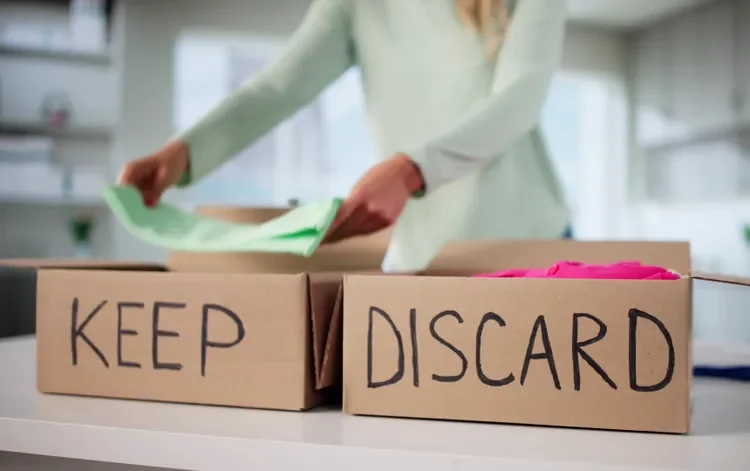
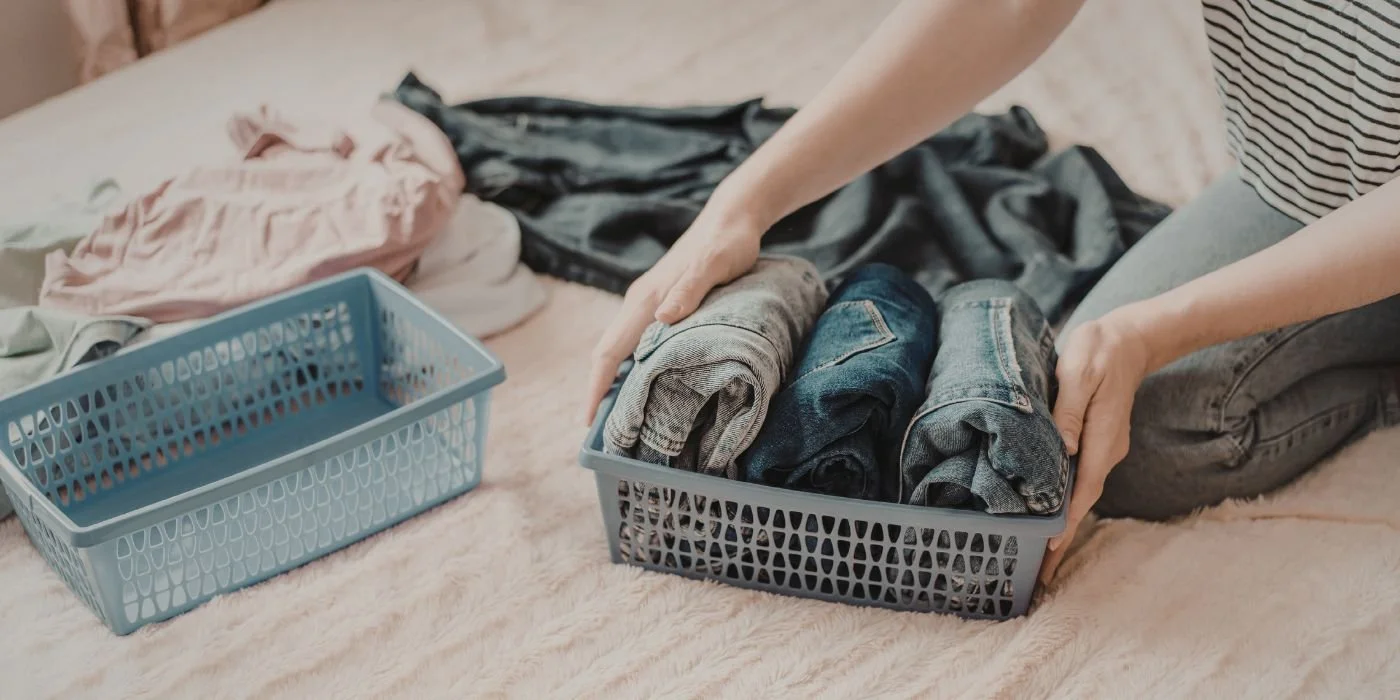
The solution is to reduce the scope. A single drawer, a shelf, or a small category provides a clear entry point. Once that first space is complete, the next step becomes easier to see.
2. You Feel Overwhelmed by the Size of the Task
Clutter often disguises itself as one large problem. In reality, it is a collection of small, unfinished decisions.
When everything is viewed at once, the brain registers the task as too large. That leads to avoidance.
Breaking the process into smaller sections removes that pressure. Decluttering becomes manageable when it is approached in pieces rather than as a whole.
3. You Spent Money on the Item
Money creates attachment. When an item cost more than expected, it can feel wrong to let it go.
This is one of the most persistent decluttering challenges. The thought process often sounds like this. I paid for it, so I should keep it.
The cost has already happened. Keeping the item does not change that. What it does change is the space it occupies and the mental energy it continues to take.


4. You Attach Meaning to the Object
Emotional clutter is often tied to memories. Gifts, souvenirs, and personal items can feel like they hold the past in place.
Letting go of those items can feel like losing something more than the object itself.
In practice, the memory does not depend on the object. Keeping a small number of meaningful items often makes those memories easier to appreciate rather than burying them among many similar things.
5. You Think You Might Need It Someday
The idea of needing something in the future keeps many items in storage for years.
This form of decluttering mindset focuses on preparing for every possible situation. The result is a home filled with items that rarely get used.
Most needs can be met when they arise. Many items can be replaced, borrowed, or adjusted for in the moment.
6. You Are Saving Things for Someone Else
Items are often kept with someone else in mind. Children, family members, or friends.
The intention is thoughtful, but the items may never be used by the person they are being saved for.
Holding onto them delays a decision that may never need to happen. Letting go allows the space to serve your current life.
7. You Don’t Want to Be Wasteful
Many people associate decluttering with waste. Letting something go can feel like contributing to a problem rather than solving one.
In reality, unused items already represent a form of waste. They take up space and remain unused when they could be helpful to someone else.
Donation, recycling, and repurposing allow those items to be used again.
8. You Feel Like You Have to Do It Alone
Decluttering can feel isolating. When the task becomes too large, it is easy to believe that you should be able to handle it on your own. This belief often slows progress. Support changes the experience. A friend, a family member, or a professional can provide perspective and momentum.
Sharing the process makes it easier to move forward. We also offer Virtual Organizing services so you don’t have to do it alone.
How to Move Past Common Decluttering Challenges
Understanding why people struggle to declutter is the first step. The next step is shifting how the process is approached.
Start small. Focus on one space or one category at a time. Make decisions based on how you live today rather than how you lived in the past or might live in the future.
Accept that decluttering is a skill that improves with practice. Each decision builds confidence for the next one.
A Different Way to Think About Decluttering
Decluttering is not about creating a perfect home. It is about creating a space that works. When you remove what no longer supports your life, what remains becomes easier to use and easier to maintain. The process becomes less about getting rid of things and more about making room for what matters. If you need help getting started, our Declutter Deck is the perfect solution.
