

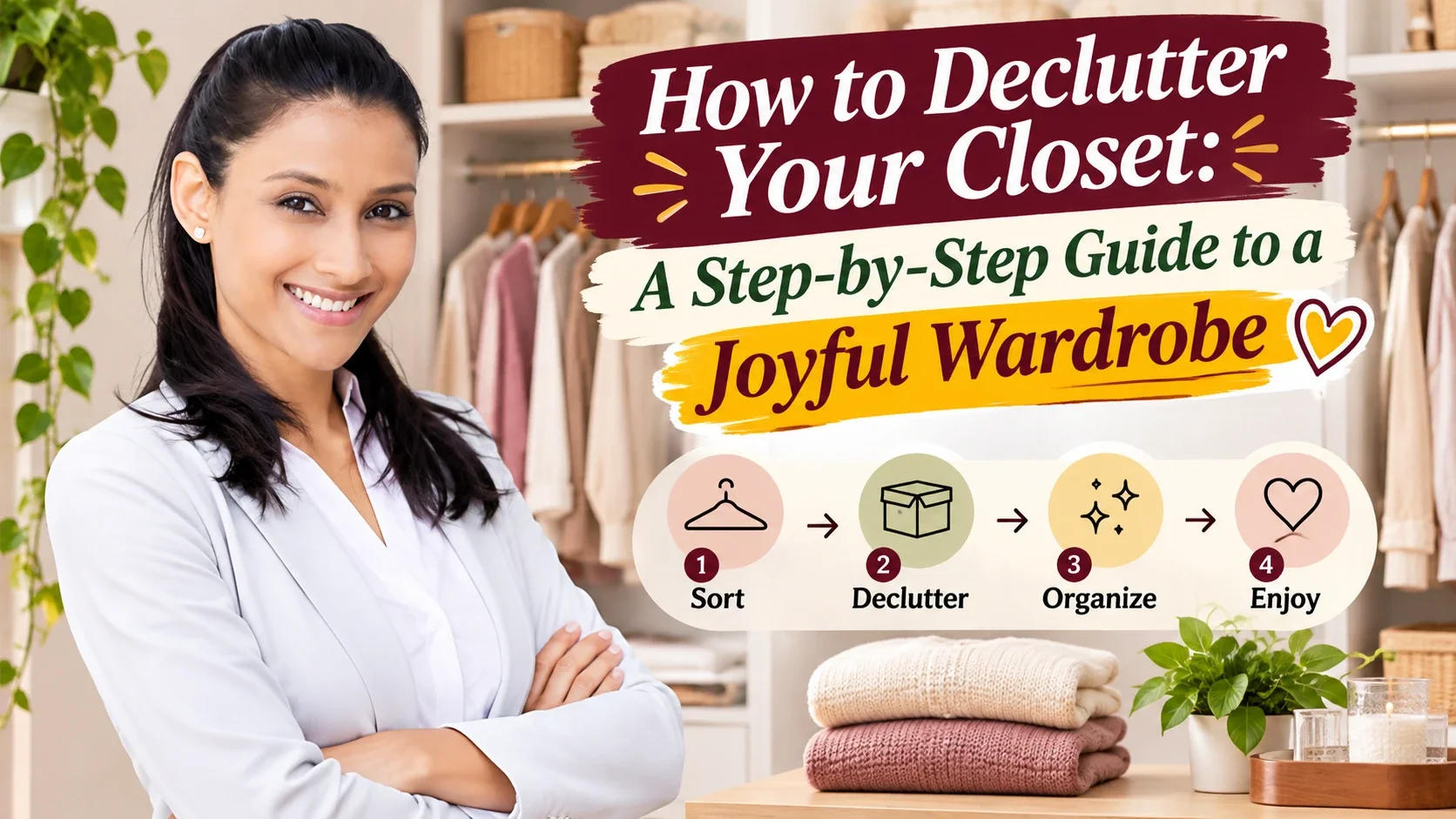
Learning how to declutter your closet is one of the simplest ways to make your mornings easier and create a more functional home. When you start the day with an organized wardrobe, choosing what to wear becomes less frustrating and more enjoyable. Instead of searching through overcrowded drawers or sorting through clothing that no longer fits, you can focus on the pieces you genuinely need, wear, and love.
Streamlining your wardrobe may be easier than you think. By removing clothing that no longer suits your lifestyle, organizing what remains, and creating a system you can maintain, you can make getting dressed a more enjoyable part of your daily routine. The goal is not to own as little clothing as possible but to create a collection that reflects your personal style and makes you feel comfortable and confident.
For additional guidance, explore our article on simplifying your wardrobe with the three F's, which offers a practical framework for evaluating clothing. You can also use The Uncluttered Life's Declutter Deck® for focused home decluttering prompts that help you make progress one manageable task at a time.
The Psychology of a Streamlined Wardrobe
Many people feel a sense of frustration when they open their closet doors. An overcrowded wardrobe can create visual distractions that make it difficult to see what you own and decide what to wear. When clothing is tightly packed on hangers, drawers are overflowing, and shoes are scattered throughout the space, getting dressed can become an unnecessarily complicated task.
A cluttered closet can also contribute to decision fatigue. When you are confronted with too many options, including clothing that no longer fits, items you rarely wear, and pieces that do not work together, choosing an outfit may require more effort than necessary. Reducing unnecessary belongings and creating an organized wardrobe can simplify these everyday decisions.
A thoughtfully decluttered closet contains clothing that fits your current body, supports your lifestyle, and makes you feel comfortable and confident. Instead of searching through garments that create frustration or guilt, you can choose from pieces you genuinely enjoy wearing. There is something satisfying about opening a closet and knowing that the clothing inside has been selected intentionally.
The goal is to create a wardrobe that works for you rather than one that requires constant sorting and rearranging. When everything has a designated place and the clothing you own reflects your current needs, getting dressed can become a simpler and more enjoyable experience.
Organization Methods for Every Personality
There are two effective ways to approach a wardrobe audit, and the best choice depends on your schedule, energy level, and the amount of clothing you own. Some people prefer to evaluate everything at once, while others find it easier to work through smaller sections over several days or weeks. Both approaches can help you reduce unnecessary clothing and create a more functional closet.
Making the Pile
The first approach is to gather all your clothing and evaluate it as one complete category. This is a central part of the KonMari Method®, developed by Marie Kondo, which encourages decluttering by category rather than by room. Clothing is the first category in the traditional KonMari sequence.
Begin by collecting clothing from your closets, dressers, laundry room, and storage areas. Place everything together in one central location so you can see the full volume of what you own. This can be an eye-opening experience, especially if you have clothing stored in several different places throughout your home.
Seeing your entire wardrobe together makes it easier to identify duplicates, forgotten purchases, and clothing you no longer wear. You can compare similar items, evaluate what fits your current lifestyle, and decide which pieces deserve a place in your closet. Rather than automatically returning everything to storage, you make intentional decisions about what to keep.
This method can be particularly effective when you want a comprehensive wardrobe reset. However, it requires sufficient time, space, and physical energy to complete the project. Before beginning, make sure you have a realistic plan for sorting everything, handling donations, and putting away the clothing you decide to keep.
The Sectional Approach
The second option is to declutter your wardrobe in smaller, manageable sections. Instead of gathering every piece of clothing at once, work through one drawer, shelf, or clothing category at a time. For example, you might sort through socks and undergarments on Monday, evaluate hanging tops on Tuesday, and review shoes or accessories later in the week.
This approach works particularly well for people with busy schedules, limited energy, or wardrobes that would be overwhelming to tackle in a single session. Breaking the project into smaller sections allows you to make thoughtful decisions without leaving your bedroom covered in unfinished piles of clothing.
Start with an area you can realistically complete in the time available. Remove the items, evaluate what you use and enjoy, and return only the clothing you want to keep. Once that section is organized, move on to another. You can also establish a designated donation bag or box so unwanted clothing has somewhere to go until you are ready to remove it from your home.
Both approaches can lead to the same outcome: a more organized closet filled with clothing that fits your needs and personal style. Whether you prefer a complete wardrobe reset or a gradual, section-by-section process, the most important step is reducing the amount of clothing you no longer wear before organizing what remains.


Action Steps to Begin Your Decluttering Journey
Before you begin decluttering your closet, prepare four boxes or bags to help you sort your belongings. Having designated places for items you are not keeping makes the process easier to manage and prevents unwanted clothing from spreading throughout your bedroom. Label each container so you can make decisions as you work without creating additional piles.
Donate or Sell: Clothing, shoes, and accessories that are in good condition but no longer fit your needs or personal style. Donate everyday items and consider selling pieces that have enough resale value to justify the time and effort involved.
Garbage: Items that are damaged, contaminated, or otherwise unsuitable for reuse or recycling. Check local disposal guidelines before throwing away textiles.
Recycling: Clothing and other textiles that are too worn to donate but may be accepted by a textile-recycling program. Check the facility's requirements, since textiles generally should not go into ordinary curbside recycling bins.
Bring It Home: Belongings that have ended up in your closet but actually belong somewhere else in your home. Return these items to their proper locations rather than allowing them to accumulate in another area.
Once your sorting containers are ready, choose a manageable section of your wardrobe and begin evaluating the contents. Keep your donations and recycling separate so you can remove them promptly when the project is complete. The goal is to finish each section without leaving additional clutter behind.
The Decision-Making Process
As you handle each piece of clothing, ask yourself four simple questions: Do I wear it? Do I like it? Is it sentimental? Does it fit? These questions provide a practical framework for determining which belongings deserve space in your wardrobe. Consider whether each item supports your current lifestyle, feels comfortable, and makes you confident when you wear it.
If something no longer fits or has not been worn in more than a year, consider whether it is worth keeping. This guideline is not absolute, especially for seasonal clothing, special-occasion outfits, or pieces that serve a specific purpose. However, clothing that consistently remains unworn may be taking up valuable space that could be used more effectively.
Sentimental clothing deserves special consideration. A wedding dress, a favorite childhood garment, or a piece connected to an important memory may be worth preserving even if you no longer wear it. Instead of keeping sentimental items mixed into your everyday wardrobe, consider creating a designated keepsake storage area with appropriate protection for delicate fabrics.
The goal is not to eliminate every piece of clothing you rarely wear. It is to build a wardrobe that reflects your current needs while giving meaningful possessions a thoughtful place in your home.
Organizing Your Clothing for Daily Success
Once you have removed clothing you no longer need, you can begin organizing what remains. There are several effective ways to arrange a wardrobe, and the right approach depends on how you naturally choose your clothing. You might organize by garment type, color, season, or the activities for which you wear certain outfits.
Grouping similar items together is often a practical starting point. Keep shirts with shirts, pants with pants, and dresses with dresses. If your lifestyle includes different types of clothing, you might create separate sections for work attire, casual clothing, workout gear, and special occasions. This can make it easier to find appropriate outfits without searching through unrelated garments.
Organizing clothing by color can also improve visibility and create a more cohesive appearance. Within each category, arrange items from light to dark or in another sequence that makes sense to you. This approach is particularly helpful when you want to locate a specific color or coordinate clothing more easily.
If you live in a climate with distinct seasons, consider storing off-season clothing in a separate location to create more room for the items you currently wear. Choose clean, dry storage areas and appropriate containers that protect fabrics from moisture, dust, and pests. Avoid overcrowding storage bins, especially when storing delicate or structured garments.
The important thing is to create an organizing system that works with your daily routine. A beautifully arranged closet is only useful if you can easily find what you need and return clothing to its designated place.
Maintaining Your New Space
Maintaining an organized wardrobe is an ongoing process, but it becomes easier when you develop habits that prevent unnecessary clothing from accumulating. One of the most important changes involves becoming more intentional about what you purchase. Instead of buying something simply because it is on sale or catches your attention, consider whether it genuinely belongs in your wardrobe.
Before purchasing new clothing, ask yourself where you will store it and how it will work with pieces you already own. A helpful guideline is to imagine at least three outfits you could create using the new item. If you struggle to identify ways to wear it, consider whether the purchase will add value to your wardrobe or simply become another piece that remains unused.
Adopting a one-in, one-out rule can also help prevent overcrowded drawers and closets. When you bring home a new sweater, for example, consider donating an older sweater you no longer wear. This approach helps you maintain a manageable volume of clothing without repeatedly having to complete major decluttering projects.
Make a habit of returning clothing to its proper place after wearing or laundering it. Occasionally review your wardrobe to identify pieces that no longer fit, have become worn out, or no longer reflect your personal style. These small maintenance habits can help preserve the progress you have made and keep your closet functional throughout the year.
Moving Toward a More Intentional Home
Creating an uncluttered home begins with the thoughtful decisions you make about your belongings. By taking time to evaluate your wardrobe, remove unnecessary clothing, and organize what remains, you can make everyday routines easier and create a space that better supports your lifestyle.
A streamlined closet is not about owning the fewest possible garments. It is about keeping clothing that fits, feels comfortable, reflects your personal style, and serves a purpose in your current life. When your wardrobe contains pieces you genuinely enjoy wearing, getting dressed can become a simpler and more satisfying part of the day.
As you declutter, remember that unwanted clothing does not always need to end up in the trash. Wearable items can often be donated or passed along to someone who will use them, while certain worn or damaged textiles may be accepted by specialized recycling programs. For additional information about responsible textile reuse and recycling, visit the Council for Textile Recycling or the Secondary Materials and Recycled Textiles Association (SMART).
Learning how to declutter your closet is about more than organizing clothing. It is about creating a wardrobe that makes everyday life easier and a home filled with belongings you genuinely need, use, and love.