

Every November, the internet starts yelling. SALE. LOWEST PRICE. ALMOST GONE. And for a few minutes, a second air fryer can feel like a household emergency.
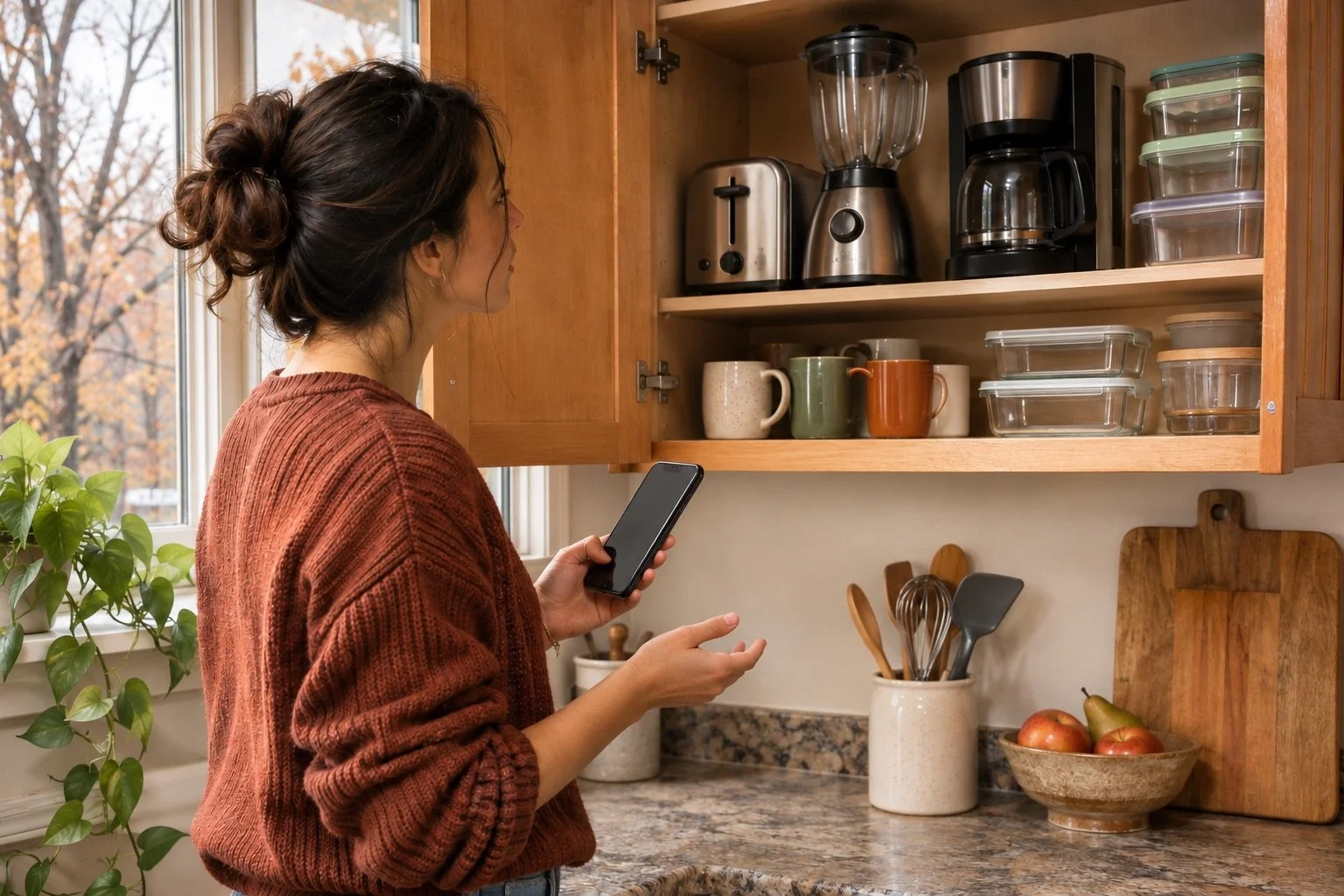
That’s the strange thing about Black Friday. It can turn “I never use the one I own” into “But this one has two baskets.” Before you shop, take a lap around your house. Seriously. Open the cabinets, look in the closets, and see what’s already in there. You don’t need a clipboard or a spreadsheet unless that sounds fun to you. Your phone camera and twenty quiet minutes will do.
The point is to interrupt the part of your brain that sees a marked-down price and forgets you already own the thing.
Start with your personal danger zone
We all have one. Maybe yours is throw blankets. Water bottles. Skin care. Little kitchen appliances that promise to turn dinner into a calm, beautifully lit experience. Maybe you can walk past a television without blinking but lose all judgment near storage baskets.
Go to that category first. Pull things forward. Look behind the front row. Check the basement shelf and the guest room closet. Count what you own, including the stuff still in the package. This can get mildly embarrassing. That’s fine. Mild embarrassment is cheaper than another set of matching containers.
Take a few pictures while everything is visible. Put them in an album called Before Black Friday or Please Do Not Buy Another Mug. Use whichever title will get your attention later.
Make two lists. Keep them short.
The first list is We Already Have This. This is where you write down the things you’re likely to forget while shopping:
A waffle maker
Four phone chargers
Two unopened sheet sets
Plenty of gift wrap
A stack of board games no one has played
Enough candles to survive a very long power outage
Your list will look different. It should. The useful part is seeing the truth in your own words. The second list is We Actually Need This. Be annoyingly specific here. “New towels” is vague enough to become twelve towels. “Four bath towels because ours are fraying” gives you a boundary.
Add the size, quantity, color, or budget if it matters:
One winter coat, child’s size 10
Two standard sleeping pillows, under $60 total
One USB-C wall charger with two ports
A vacuum that can handle pet hair
That tiny bit of detail makes comparison shopping easier. It also exposes the fake needs. If you can’t explain what problem the item solves, it probably belongs on the first list.
The sale version isn’t automatically the better version
Sometimes you already own the item, but it’s broken, awkward, or wrong for your current home. That counts. A slow cooker with a cracked insert isn’t meeting the need. Neither are sheets for a bed you no longer own. Replacing those things is reasonable. The trick is being honest about the word replace.
Replace means the old one is leaving. Soon. It doesn’t mean the old blender moves to the garage, the garage blender moves to the basement, and everybody agrees to deal with it “later.” As you look around, decide:
Keep it. It works and you use it.
Use it up. You’ve already got three open bottles, six notebooks, or a year’s worth of shampoo.
Replace it. The current one is broken, worn out, or no longer fits the job.
Let it go. It’s taking up space and living entirely on good intentions.
If you’re arguing with yourself over every object, try these 10 questions to ask before you keep anything. You don’t need to run the full interrogation on a wooden spoon. Save it for the things that have you stuck.
Where is the new thing going to live?
This question ruins a lot of impulse purchases. I mean that as a compliment. Where will it go? Not “in the kitchen.” Which cabinet? Which shelf? What’s there now?
A bulky appliance needs a bulky-appliance-sized home. Twelve food containers need a drawer or shelf. A giant toy set needs more than a hopeful glance toward the playroom. If you can picture the exact spot, great. If that spot is full, you have another decision to make before you buy. Please don’t solve the problem by adding a storage bin to your cart. A bin is not a portal to extra square footage.
Let the item sit in your cart
Online stores would like you to believe that waiting twelve hours is reckless. Wait anyway. Leave nonessential items in the cart overnight. Then look at your photos. Check the two lists. Ask the annoying questions:
Do I own something that does this already? Would I want it if it weren’t on sale? Am I buying for my actual life or a fantasy version of it?
Do I have somewhere to put it? If the answer is still yes the next day, buy it. You’re allowed to enjoy a sale. If the sale ends while you’re thinking, you didn’t lose money. You kept it.
It’s also worth checking the real price somewhere else. A sale tag doesn’t prove it’s the best deal. Consumer.gov recommends comparing prices and counting shipping costs, which is simple advice and easy to forget when the timer is running.
A bargain can still be clutter
The price is only part of what an item costs. It also needs space. It has to be cleaned, charged, folded, maintained, moved around, and eventually dealt with when you no longer want it. That doesn’t make buying things bad. It just means the little red discount number doesn’t tell the whole story. For a larger reset before guests and gifts begin arriving, What to Declutter Before the Holidays is a good next step. If the shopping pressure itself is the problem, Consumer Culture and Saving Money Instead goes deeper into why buying less can feel harder than it sounds.
But don’t turn this into a whole-house project tonight. Pick the categories that get you every year. Take the pictures. Make the two lists. Then, when a sale ad tells you that you desperately need a seventh travel mug, you can consult the cabinet instead of the countdown clock.
