

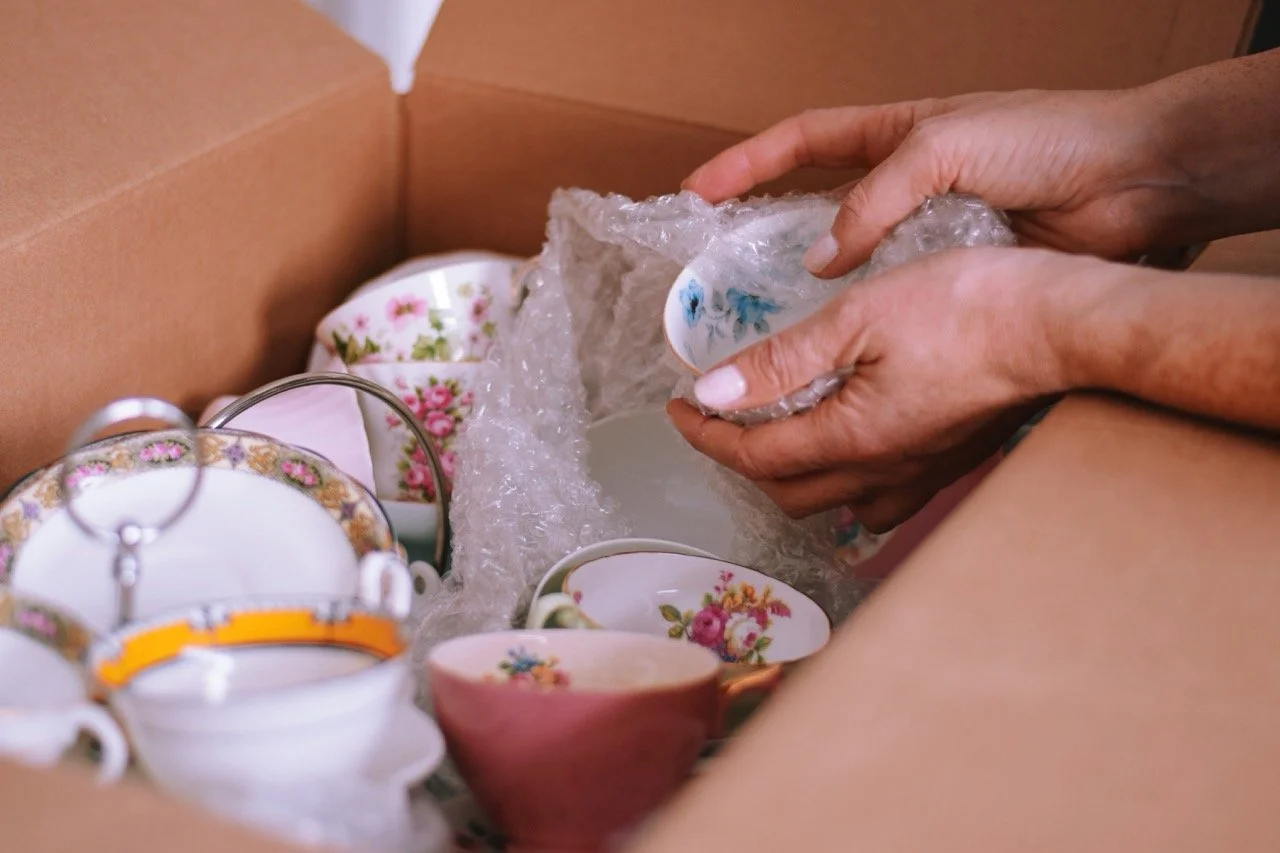
A china cabinet can hold years of Sunday dinners and memories of the home where everyone gathered. When an adult child says, "I don't want it," the answer may sting even when it is honest.
If you are wondering what to do with family heirlooms when downsizing, try not to measure anyone's love by what they can take home. Your children may care about the family story but have no room for the cabinet or no occasion to use twelve place settings. Their answer tells you what fits their home and daily life.
Ask before making plans for someone else
Your children may want one piece of the china or none of it, so ask them directly. "Do you want any of this?" can sound like an offer of everything in the cabinet. Name one piece instead: "Would you like Grandma's blue serving bowl?" You can also ask whether something else from the set would be useful in their home.
When someone lives far away, send a photo along with the item's size and condition. Give them a date to answer. If they say yes, settle on pickup or shipping before the move. Accept the answer if they decline; an heirloom does not need to become a test of affection.
Our guide to the emotional side of downsizing explains how relatives can remember the same object differently. Asking now is kinder than storing a collection for someone who never requested it.
Save the part of the memory you want to share
Consider what draws you to the heirloom. You may be thinking about the person who owned it or a family ritual connected to it. Perhaps you love the object itself and still use it. Once you know what you hope to carry forward, the next choice is usually clearer.
If the story is what you most want to keep, photograph the object in good light. Take a close photo of the maker's mark or a handwritten note. Write down who owned it and how it was used in your family. A short voice recording can work if talking feels easier than writing.
The Library of Congress recommends making copies of family photographs and documents and sharing them with relatives. It also notes that sharing family artifacts can start conversations worth recording. A photograph paired with a few sentences gives relatives context they would not get from the object alone.
Choose one piece from a larger collection
A collection does not have to stay intact to carry family meaning. You might keep the teacup your grandmother used every morning rather than a full service for twelve. If you inherited a workshop, one well used hand tool may be the piece that brings the person to mind.
Choose something that fits your next home and can be used or displayed there. Our article on downsizing without regret recommends setting aside a defined amount of space for sentimental belongings, then choosing what best represents the larger story.
Fragile, old, or unusually valuable objects may need special care. The Smithsonian Museum Conservation Institute offers care guidelines for inherited heirlooms and other treasured objects. For a rare or damaged piece, a qualified appraiser or conservator can give you better guidance than a quick online price search.
Offer a gift without adding a duty
One child may love a platter but have no use for the rest of the place settings. A niece might want the recipe box and not the other kitchenware. Offer specific items to the people who may connect with them, even if that means splitting up a collection.
Set a pickup date when a move is approaching. If the person cannot take the object in time, you can send the photograph and the written story instead. The words you use matter. "This made me think of you" leaves room for a real choice. "You have to keep this in the family" gives the recipient responsibility for storage and care, whether or not the item suits their home.
Look beyond your immediate family
A cousin or another relative may feel connected to the object or to that branch of the family. Send photos of specific pieces with a clear reply date instead of a general message about boxes of family things.
For an item with a known maker, pattern, or specialty, contact a collector club or a reputable local auction or consignment professional. Ask about current demand and fees before assuming age creates value. Find out how pickup works too. Trying to sell every object can become a demanding project during a move, so choose the pieces that justify the time.
A local historical society may be interested in an object with documented local significance. School theater departments, cultural organizations, houses of worship, and community arts groups sometimes use particular household items. Contact the group first and describe the piece so staff can tell you whether it helps their work.
Donation groups can take many usable household goods, although needs and condition rules vary. The Uncluttered Life's guide to donation ideas after decluttering recommends checking what an organization accepts before loading the car. If you plan to claim a charitable deduction, use the IRS Tax Exempt Organization Search to check whether the organization can receive tax deductible contributions. Keep the documentation required by the IRS.
Work through one shelf at a time
Start with one shelf or one category so the whole family does not have to discuss every heirloom at once. Ask which pieces people want. Record the stories you hope to preserve, then choose a representative item when the full collection will not fit. Set a destination and departure date for what remains.
You and your children are each deciding what belongs in the home you live in now. A family memory can continue in a story or one useful piece, even when the larger collection finds another home. A photograph can be shared with relatives who have no room for the object itself.
If these decisions feel heavy, The Uncluttered Life provides emotionally sensitive downsizing support without rushing or shaming you. You can give meaningful pieces careful attention and still keep the move on schedule.