

Declutter With Kids Without Tears or Power Struggles
Decluttering with kids looks very different from decluttering alone. Children experience their belongings emotionally, not just practically. Toys, books, rocks from the yard, and half finished art projects often represent comfort, memory, and identity. When adults try to rush the process or take control too quickly, decluttering turns into conflict.
Learning how to declutter with kids starts with a mindset shift. The goal is not a perfectly tidy room. The goal is helping children feel capable, respected, and supported while reducing overwhelm. When kids are involved in the process, organization becomes something they understand rather than something done to them.
Kids do not need more things. They need spaces that work for them. Decluttering creates those spaces. Look to The Uncluttered Life’s Declutter Deck® for tips and tricks about home organization.
Why Involving Kids Matters
Once children reach preschool age, they become deeply attached to their belongings. These items bring comfort and joy, even when they appear random or insignificant to adults. Decluttering without their involvement often leads to distrust and resistance later.
When kids participate, they learn decision making, responsibility, and emotional regulation. They begin to understand that letting go does not mean loss, but transition. Decluttering with kids works best when it is collaborative rather than directive.
Start With Organization Before Decluttering
One of the most overlooked steps in how to declutter with kids is organization. Before asking children to let go of items, help them understand where things belong.
Children often sort differently than adults. They may group items by color, by character, or by how they use them in play. Respecting their logic helps systems stick.
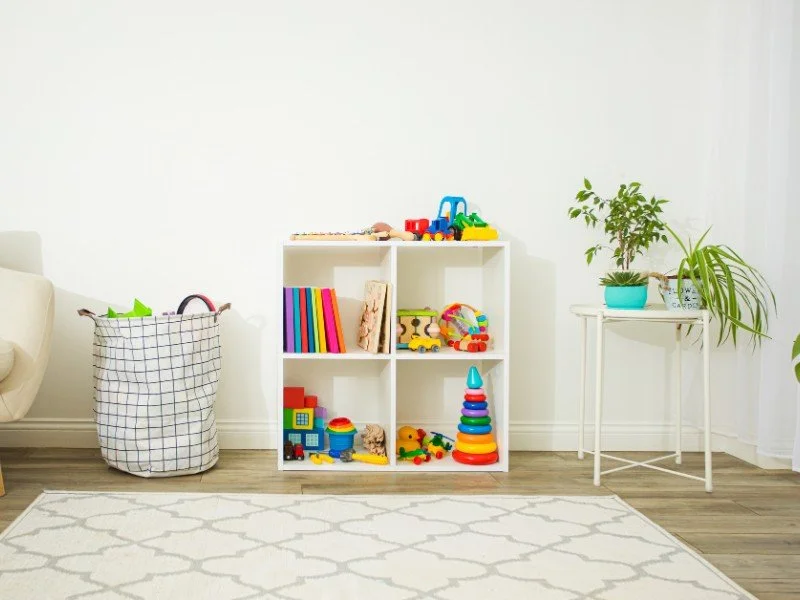
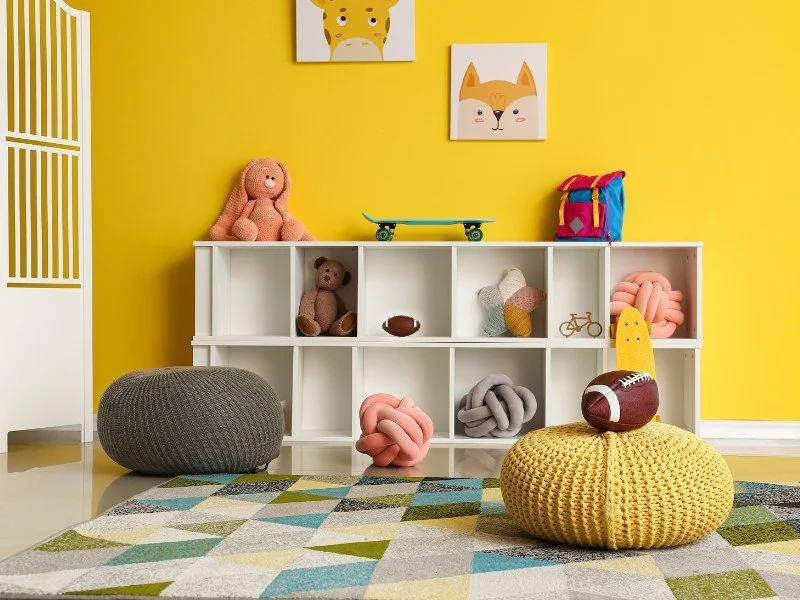
Use simple, visible storage. Low shelves, clear bins, or open baskets allow kids to access and return items independently. If a system requires adult intervention to maintain, it will fail.
Use Spatial Limits to Guide Decisions
Spatial limits are one of the most effective tools for decluttering with children. A spatial limit is a defined container or space that holds a category of items. This might be a shelf, a drawer, or a single bin.
The rule is simple. The container is the limit. When it is full, choices must be made.
This approach removes judgment from the process. Instead of deciding what to get rid of arbitrarily, kids decide what they want to keep within the space available. This builds autonomy and reduces power struggles.
Fewer Toys Lead to Better Play
More toys do not lead to better play. In fact, too many choices often create overwhelm. Kids may jump from item to item without settling into deeper play.
Decluttering with kids helps reduce visual noise and mental overload. With fewer options, children are more likely to engage creatively and independently. Play becomes richer, not smaller.
This is an important point to return to when kids feel unsure. Decluttering is not about taking things away. It is about creating room to enjoy what remains.
Start With Low Stakes Items
When learning how to declutter with kids, always start with low stakes categories. These might include broken toys, outgrown clothes, old art projects, or books they no longer read.
Beginning here helps children build trust. They see that they are not being asked to give up their favorite things right away. This makes future decisions easier.
Let kids lead where possible. Ask open questions. Which ones do you still use? Which ones feel finished? Which ones would you like another child to enjoy?
Be Specific About Donations
Children are more willing to let go when they understand where items are going. Instead of vague explanations, be specific.
Tell them the toys are going to a shelter, a school, or another family. Explain that the items will be used and appreciated. Some children may even enjoy helping deliver donations.
This clarity gives purpose to the process and helps kids feel good about their choices.
Model Letting Go Yourself
Children learn more from what they observe than what they are told. One of the most powerful ways to teach decluttering is to let them see you doing it.
Talk through your decisions. Explain why something is hard to let go of. Share how you decide whether to keep or release an item.
This transparency teaches kids that decluttering is not about being careless. It is about being intentional.
Create Simple Action Steps
Decluttering with kids works best in short sessions. Long clean out days often lead to fatigue and frustration.
Set a timer for twenty minutes. Focus on one category or space. Stop while things are still going well.
Celebrate progress, even if it feels small. A single shelf cleared is still a win.
Treasure Boxes for Small Collections
Kids love small objects. Rocks, leaves, stickers, and trinkets hold real meaning. Instead of trying to eliminate these collections, contain them.
A treasure box gives kids permission to keep what they love within limits. When the box fills up, they choose what stays.
This approach honors attachment while preventing clutter from spreading.
Stay In Control of What Comes In
Decluttering will not stick if items continue to enter unchecked. Parents have control over what comes into the home, even when kids do not.
For birthdays and holidays, consider requesting experiences instead of more things. Classes, outings, or shared activities create memories without adding clutter.
When items do come in, involve kids in deciding where they will live. This reinforces responsibility and awareness.
Decluttering as an Ongoing Skill
Learning how to declutter with kids is not a one time project. It is a skill that develops over time. Each round becomes easier as children grow more confident in their ability to make decisions.
The goal is not perfection. It is progress. A home that supports play, rest, and daily life without overwhelm benefits everyone who lives there.
With patience, respect, and clear systems, decluttering with kids becomes less about removal and more about creating space for what matters.
And that is a lesson worth teaching early.