

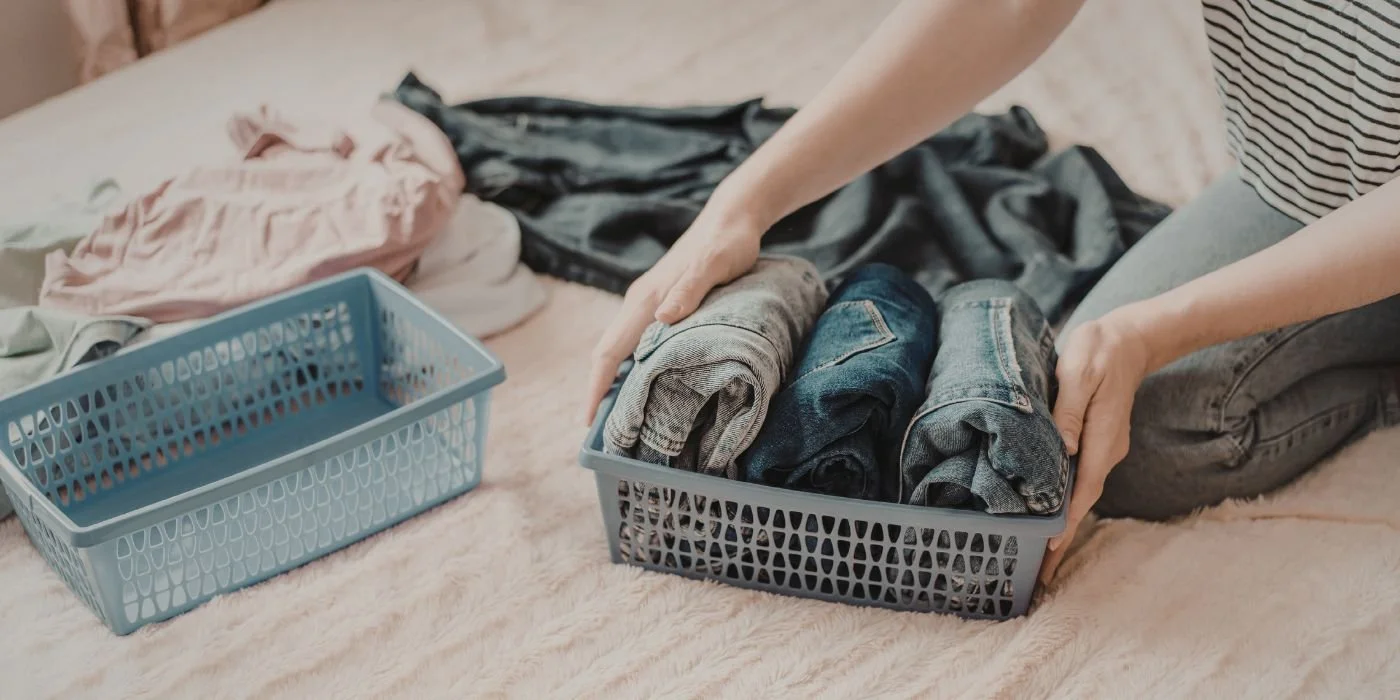
Why We Struggle to Let Go of Clutter
8 Roadblocks to Decluttering
Thoughts We Tell Ourselves About Decluttering
“I Don’t Know Where to Start.”
Feeling overwhelmed is completely normal - clutter disguises itself as one big problem even though it’s really just a collection of tiny indecisions stacked together. The trick is to shrink the problem until it feels manageable: pick one drawer, one surface, or even just one category, and give yourself permission to stop when that’s done. Once you take that first small action, you replace analysis paralysis with momentum, and momentum is what turns chaos into progress. You don’t need a perfect plan or a full weekend to begin - you just need a starting point that’s small enough to say yes to today. Check out our Declutter Decks® that help you find your place to begin.
“I Spent Good Money on It.”
Many of us look at unused items and think, “I spent good money on this,” as if keeping the object somehow brings the money back. But the truth is, the moment we bought it, the cost was spent and holding onto it doesn’t refund our wallet, it just charges our spaces energy, and peace of mind. When you donate, sell, or release something you no longer use, you’re not being wasteful - you’re stopping the waste of letting it sit idle. Instead of letting guilt decide what stays, let usefulness decide: if an item isn’t actively serving you today, it’s costing you more than it’s giving. Letting go isn’t losing value, it’s reclaiming it in the form of clarity, room to breathe, and freedom from silent clutter taxes.
“It Has Sentimental Value.”
Sentimental items are often the hardest to let go of because they feel like they hold memories inside them. But the memories aren’t in the object - they’re with and in you. When everything becomes “special,” nothing actually gets to stand out, and the emotional weight of storage boxes, drawers, and closets quietly follows you through daily life. By choosing a small number of truly meaningful pieces to display or preserve, you honor the memory instead of burying it under clutter. You don’t have to keep every souvenir, ticket stub, or gift to respect the people and moments who shaped you - letting go of the extras frees up space for the memories you’re still making.

“I Might Need It.”
The fear of “someday” is one of the biggest reasons clutter sticks around - it tricks us into preparing for a future that rarely arrives. But keeping objects “just in case” comes with real costs: they take up physical space, create visual noise, and quietly drain mental bandwidth every time you move, store, or sift through them. If you haven’t used something in years, chances are that if a true need does arise, you’ll either improvise or replace it very quickly. Instead of preparing for every hypothetical scenario, prepare for a life that’s easier to move through today. Letting go isn’t being careless - it’s choosing to trust that your home exists to support your present, not to warehouse your anxieties about the future.
“I’m Saving It For (Fill in the Blank).”
That blank we all fill in - “for a project,” “for someone,” “for a special occasion” - often becomes a holding pattern where things pile up waiting for a moment that never actually comes. The problem isn’t the object, it’s the postponement. When everything is being “saved,” nothing gets used, and the real cost becomes the space those unused items quietly consume. Instead of saving things for an ideal future, ask whether they add value to the life you’re living right now. If not, releasing them creates more room, clarity, and ease than any hypothetical scenario ever will. Letting go isn’t giving up on possibilities, - it’s choosing to live more fully in the present.
This is similar to Swedish Death Cleaning. This approach is about thoughtfully letting go of what no longer serves you so you don’t leave a burden of belongings for others to sort through later.
“It’s Still in Good Condition.”
Just because something is still in good condition doesn’t automatically make it worth keeping. The real question isn’t how well the items has held up - it’s how well it serves your life today. If an object is taking up space without actively earning that space, then its good condition becomes an opportunity, not an obligation. By donating or selling it, you allow it to be useful instead of buried, and you make room for a home that reflects who you are now, not the leftovers of past purchases. Keeping something simply because it’s intact turns your home into storage, letting it go turns it into living space.
“I Don’t Want to Be Wasteful.”
A lot of us equate getting rid of items with waste, but there’s a hidden waste in keeping things we never use. When objects sit untouched, they waste the space they occupy, the energy required to maintain or store, them, and the opportunities they could have had in someone else’s hands. Donating, selling, or responsibly recycling allows the item to fulfill its purpose rather than gathering dust out of guilt. Waste isn’t created when we let something go - it’s created when we let perfectly useful things languish in closets and corners. Releasing them isn’t wasteful; it’s a way of finally putting them back into circulation where they can do good.
“I Can’t Do It On My Own.”
Clutter can feel heavy not just because of the stuff, but because of the decisions or circumstances attached to it. Asking for help isn’t a sign of weakness; it’s a strategy for moving forward A friend, family member, professional organizer, or even a donation pickup service can provide the structure, accountability, physical ability, and emotional distance that make sorting easier and faster. Taking that step turns decluttering from an isolating burden into a shared project, and the relief of having support often makes room not just in your home, but in your sense of capability, too.