

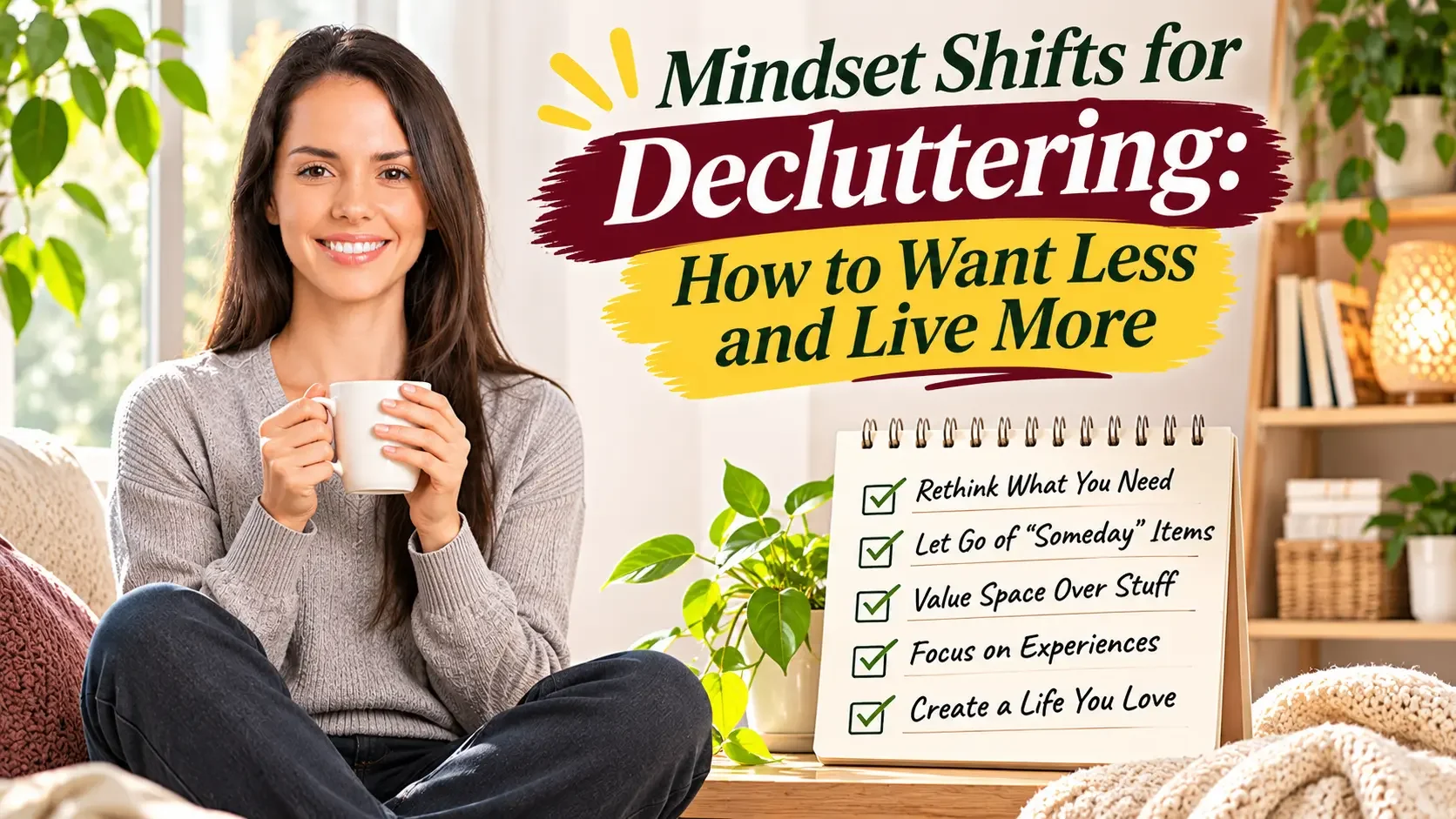
The journey toward minimalism is not always easy, and it is certainly not the right approach for everyone. Many people begin decluttering by focusing on the physical act of getting rid of possessions, only to discover that making decisions about what to keep can be more difficult than expected. The real challenge often begins with changing how you think about your belongings, what you need, and the role possessions play in your everyday life.
One of the most important mindset shifts for decluttering is recognizing that the goal is not simply to own fewer things. It is to become more intentional about what you bring into your home and what you choose to keep. When you begin questioning whether your belongings genuinely support your lifestyle, you may discover that many items you once considered necessary no longer serve a meaningful purpose.
You do not have to become a minimalist to enjoy the benefits of decluttering. The goal is to create a home that reflects your priorities, supports your daily routines, and contains a manageable amount of belongings. For some people, that means significantly reducing possessions. For others, it means creating better systems and letting go of items that no longer fit their lives.
If you are feeling overwhelmed, begin with a small, manageable space such as a bathroom drawer, medicine cabinet, or a single shelf. Completing one area allows you to see the results of your efforts and can provide motivation to continue. The Uncluttered Life's Declutter Deck® offers focused home decluttering and organizing prompts that help you take action one project at a time.
Understanding the True Cost of Your Stuff
One of the most valuable mindset shifts for decluttering is realizing that owning less often means having less to organize, clean, store, and maintain. When our homes become filled with unnecessary possessions, we may spend considerable time trying to manage belongings that no longer serve a purpose. We purchase additional storage bins, shelving units, and organizing products, sometimes without first considering whether we need everything we are trying to store.
Every item you choose to keep requires some amount of space and attention. Depending on what it is, a possession may need to be cleaned, repaired, maintained, moved, or stored. Even items that are rarely used can contribute to overcrowded cabinets, closets, and storage areas, making it more difficult to access the belongings you genuinely need.
This does not mean that every possession is a burden or that you should eliminate everything that requires maintenance. Meaningful belongings, useful tools, family keepsakes, and items you enjoy can add tremendous value to your life. The important distinction is whether the benefits of keeping something justify the space, time, and effort it requires.
When you begin evaluating belongings from this perspective, the purpose of decluttering changes. Instead of asking how to fit more possessions into your home, you begin considering how to create more room for the people, activities, and experiences that matter most.
Research discussed by the University of Colorado Boulder suggests that spending money on experiences may provide more lasting satisfaction than spending on material possessions. Although individual preferences differ, this perspective offers a useful reminder that a fulfilling life is not necessarily built around acquiring more things.
Choosing to prioritize family, friendships, hobbies, and meaningful experiences over unnecessary purchases can gradually change your relationship with possessions. Your home becomes less about storing everything you have acquired and more about providing a comfortable, functional environment for the life you want to live.
Overcoming the Guilt of Waste
A common obstacle to decluttering is the feeling that getting rid of belongings is wasteful. You may hesitate to donate an unused appliance, discard a broken item, or let go of clothing you no longer wear because you remember the money spent or the resources used to produce it. These concerns are understandable, particularly when you are trying to make thoughtful decisions about consumption and sustainability.
However, keeping an unwanted item indefinitely does not reverse the environmental impact or financial cost of its original purchase. If something is no longer useful to you, consider whether it could serve a purpose for someone else. Donating, selling, repairing, repurposing, or responsibly recycling belongings can provide alternatives to simply throwing everything away.
It is also important to recognize that not every purchase was a mistake. Your needs, interests, and circumstances change over time. Something that was useful several years ago may no longer fit your lifestyle today, and that does not mean it was wrong to own it in the first place.
The most meaningful change often comes from becoming more intentional about future purchases. Before bringing something new into your home, consider whether you genuinely need it, already own something similar, or have an appropriate place to store it. Reducing unnecessary consumption can help prevent clutter while allowing you to make more thoughtful use of your resources.
Another common challenge is holding onto belongings because you imagine needing them someday. Although certain items are worth keeping for emergencies, occasional activities, or future needs, storing everything for hypothetical situations can make your home difficult to manage. Consider whether an item's potential future usefulness justifies the space it occupies today.
You may also find it helpful to think about the long-term responsibility of managing your possessions. Belongings that remain unused for years may eventually need to be sorted by family members or loved ones. Making thoughtful decisions now can reduce that responsibility in the future while allowing you to enjoy a more functional home today.
Decluttering is not about wasting what you have or dismissing the value of your past purchases. It is about making responsible decisions, appreciating what genuinely matters, and creating space for the life you are living now.
Action Steps to Shift Your Perspective
Changing the way you think about your belongings begins with asking thoughtful questions about what you own, what you need, and how you want your home to function. Rather than approaching decluttering as an exercise in getting rid of as much as possible, focus on making intentional decisions about the possessions that deserve space in your life. These practical mindset shifts can help you evaluate your belongings with greater clarity and create a home that reflects your current priorities.
Define Your Vision
Before opening a closet or emptying a storage bin, take a moment to consider how you want your home to look, feel, and function. Do you want a peaceful environment where you can relax at the end of the day? Are you hoping to spend less time cleaning and organizing or create more space for family activities and hobbies? Defining your vision gives you a clearer purpose for decluttering beyond simply removing unwanted possessions.
Once you understand what you want from your home, use that vision to guide your decisions. Consider whether your belongings support the lifestyle you are working toward or make everyday routines more complicated. An item may be useful or meaningful without necessarily deserving space in your current home.
Your vision does not need to be based on minimalism or a particular organizing style. The goal is to create surroundings that reflect your personal priorities rather than someone else's expectations. When you understand what matters most, it becomes easier to recognize which possessions contribute to that vision and which ones no longer serve a purpose.
Evaluate the Mental Load
Every possession requires some degree of space, attention, or maintenance. While some belongings are used and appreciated regularly, others remain stored for years without serving a meaningful purpose. Over time, managing unnecessary items can make closets, cabinets, and storage areas more difficult to navigate and maintain.
As you evaluate your belongings, consider whether each item is worth the effort required to keep it. Does it need cleaning, maintenance, special storage, or occasional repairs? Does it make your life easier, bring genuine enjoyment, or serve an important purpose? These questions help you look beyond an item's original cost or potential future usefulness.
Not every possession creates a significant mental burden, and there is no need to eliminate meaningful belongings simply because they require some maintenance. The goal is to identify items that no longer provide enough value to justify the space and attention they require.
When you begin thinking about belongings in terms of their ongoing responsibilities, you may discover that letting go of unnecessary items creates more room for the possessions and activities you genuinely enjoy.
Identify the Essentials
An important part of developing a decluttering mindset is recognizing which belongings are essential to your daily life and which ones hold meaningful personal value. Begin by identifying the items you use regularly, depend on for practical purposes, or would find difficult to replace. These might include important documents, necessary household equipment, frequently worn clothing, and possessions connected to meaningful experiences.
Sentimental belongings deserve thoughtful consideration as well. Family photographs, letters, inherited items, and childhood keepsakes can preserve important memories and connections. However, keeping every object associated with a meaningful person or experience is not always necessary.
For some sentimental belongings, digitizing may provide a practical way to preserve information or memories while reducing physical storage. You might scan old letters, photograph childhood artwork, or create digital copies of family documents. For larger objects that you no longer want to keep, consider taking photographs and recording the story behind them before donating or passing them along.
Remember that digital copies are not always suitable replacements for original photographs, historical documents, or irreplaceable keepsakes. Evaluate these items carefully, preserve originals when appropriate, and maintain reliable backups of anything you digitize.
The goal is not to keep only what you would grab in an emergency or to eliminate everything that is not essential. It is to recognize the difference between belongings that genuinely enrich your life and those you are keeping primarily out of habit, guilt, or obligation.
Focus on Your Current Season
Our interests, responsibilities, and lifestyles change over time, but our belongings do not always change with them. You may have accumulated supplies for hobbies you no longer pursue, clothing from a previous career, or equipment associated with activities that are no longer part of your routine. These possessions may represent meaningful stages of your life, even when they no longer serve a practical purpose.
Consider what you genuinely need in your current season of life. Perhaps you once enjoyed elaborate baking projects but now prefer simpler meals. You may have kept an extensive collection of baking equipment because it reminds you of something you enjoyed years ago, even though you rarely use it today. Keeping a few favorite tools may allow you to preserve that connection without dedicating an entire cabinet to unused supplies.
The same principle applies to clothing, books, hobbies, and household equipment. Ask whether an item supports your current lifestyle or represents a version of yourself you feel obligated to maintain. Letting go of possessions connected to past interests does not diminish the experiences or accomplishments they represent.
At the same time, avoid making decisions based solely on how recently something was used. Seasonal belongings, emergency supplies, specialized equipment, and meaningful keepsakes may deserve space even when they are used infrequently.
Focusing on your current season encourages you to make thoughtful decisions based on your present needs while allowing room for the belongings that remain important to you.
Living in the Present
Developing a healthier decluttering mindset is not about becoming a minimalist or eliminating everything you own. It is about building a more intentional relationship with your possessions and recognizing that your home should support the life you are living today.
When you define your priorities, consider the responsibilities associated with your belongings, and evaluate what genuinely matters, decluttering becomes more than a physical organizing project. It becomes an opportunity to make choices about how you want to spend your time, energy, and resources.
You do not need to make every decision immediately or completely transform your home in one weekend. Begin with a manageable space, work through your belongings thoughtfully, and allow your progress to build over time. Some items will be easy to release, while others may require additional consideration.
For more ideas on simplifying your surroundings and creating practical organizing systems, explore The Uncluttered Life's organizing blog. You will find guidance on reducing clutter, developing sustainable habits, and making your home more functional.
The most meaningful mindset shift for decluttering is recognizing that your possessions should support your life, not determine how you live it. By keeping what matters and letting go of what no longer serves you, you can create a home that reflects your priorities, supports your daily routines, and makes more room for the experiences you value most.