

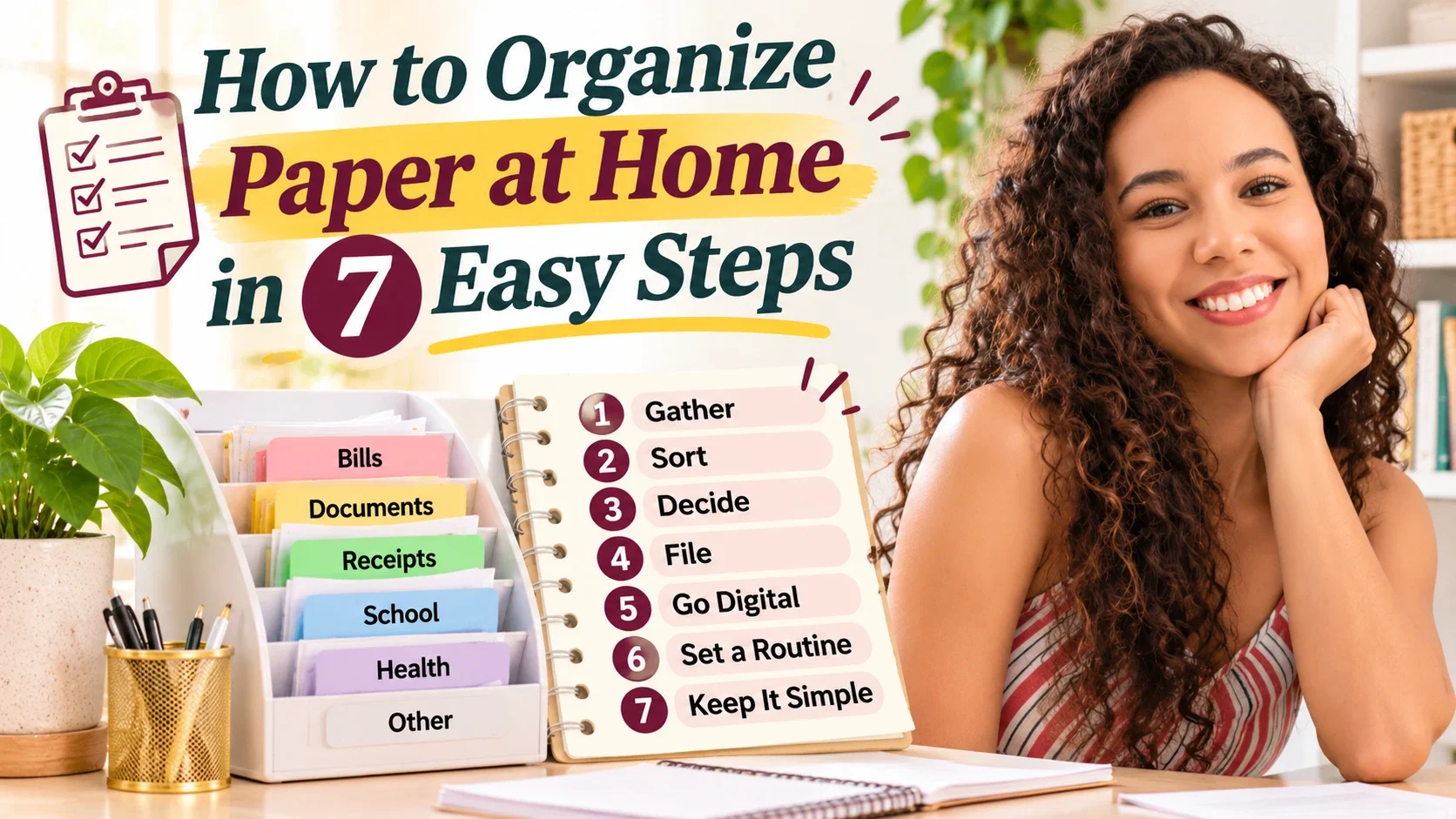
Paperwork management may not be the most exciting household responsibility, but it is an essential part of maintaining an organized home. Bills, receipts, insurance policies, tax records, medical information, and legal documents all require attention, and many contain information that needs to be stored securely. When these papers accumulate on countertops, desks, and other surfaces, finding important documents can become frustrating and time-consuming.
Learning how to organize paperwork at home is about more than creating a tidy desk or filing cabinet. An effective system helps you locate important records, keep track of upcoming deadlines, protect sensitive information, and manage everyday household responsibilities. It also makes it easier to distinguish between documents that require action, those that need to be retained, and papers that can be safely discarded.
The key is to develop a simple paper management system that works with your existing habits. You do not need elaborate filing cabinets, color-coded folders, or complicated organizational tools. Instead, focus on reducing unnecessary paperwork, establishing clear categories, and creating designated locations for incoming mail and important records.
This guide explains how to organize paperwork at home, including sorting accumulated documents, establishing practical filing systems, protecting essential records, and developing manageable maintenance routines. For additional guidance, explore The Uncluttered Life's article on organizing your family's important documents.
At The Uncluttered Life, we believe that larger organizing projects become easier when they are divided into manageable steps. Our Declutter Deck® offers focused home decluttering and organizing prompts that can help you begin simplifying your surroundings one project at a time.
Getting Your Paperwork in Order
Paper clutter often represents decisions that have been postponed. An unopened envelope, unpaid bill, or document waiting to be filed may require an action that has not yet been completed. As these papers accumulate, they can become increasingly difficult to sort, especially when important records are mixed with advertisements, outdated information, and everyday household mail.
One of the most effective ways to manage paperwork is to separate documents according to what needs to happen next. Some papers require immediate attention, such as bills or forms with deadlines. Others need to be filed for future reference, while unnecessary documents can be recycled or securely destroyed when appropriate.
Creating a reliable paperwork system helps reduce the likelihood of misplaced documents, overlooked deadlines, and unnecessary searching. It can also make administrative tasks more manageable by providing clear locations for incoming mail, documents requiring action, and records that need long-term storage.
Before purchasing filing supplies or creating elaborate categories, consider how paperwork currently enters and moves through your household. Do you regularly leave mail on the kitchen counter? Are important documents stored in several different locations? Do receipts and forms accumulate because you are unsure how long to keep them?
Understanding these patterns will help you develop a system that fits your daily routines. The goal is not to eliminate every piece of paper but to make sure important information is accessible, unnecessary documents are removed, and paperwork no longer takes over your living spaces.
An effective paperwork management system should make it easy to answer three questions: What needs my attention, what do I need to keep, and where can I find it when I need it?


Step 1: Gather All Paperwork in One Place
Begin by collecting loose paperwork from the areas where it typically accumulates. Check kitchen countertops, home offices, drawers, bags, entryway tables, and vehicles. Bringing your documents together allows you to see what needs attention and identify the types of paperwork you regularly receive.
Choose a large table or another comfortable workspace where you can sort papers without unnecessary distractions. Keep recycling, shredding, and filing supplies nearby so you can make decisions without repeatedly leaving the area.
If you have accumulated several years of paperwork, avoid emptying every drawer and filing cabinet at once. Start with one location or category and work through manageable sections. The goal is to create an organized process, not surround yourself with more paper than you can reasonably sort in one session.
Step 2: Sort Into Four Primary Categories
Sorting is the foundation of an effective paper management system. As you review each document, decide whether it should be discarded, securely destroyed, filed for future reference, or placed in a designated area for action.
Use these four categories to simplify the decision-making process.
1. Trash or Recycling
Remove papers that no longer serve a purpose, such as outdated catalogs, expired coupons, unnecessary advertisements, and promotional flyers. Recycle materials accepted by your local recycling program, and discard anything that cannot be recycled.
Before recycling documents, check whether they contain sensitive information that should be securely destroyed instead.
2. Shredding
Set aside documents containing sensitive personal, medical, or financial information that you no longer need to retain. Examples may include account numbers, Social Security numbers, medical records, and other confidential details.
A cross-cut shredder is useful for household document disposal. If you do not have one, consider a reputable secure shredding service. Before destroying important records, confirm that you no longer need them for legal, tax, financial, or personal purposes.
3. Filing
Keep documents that you need for future reference, including relevant tax records, insurance policies, warranties, medical information, and property documents. Organize these papers into clearly labeled categories so they are easy to locate when needed.
Separate frequently accessed records from documents that require long-term or secure storage. Not every important paper needs to occupy space in your everyday filing system.
4. Action Items
Create a separate category for paperwork that requires attention, such as unpaid bills, forms to complete, correspondence to answer, and documents awaiting signatures.
Keep these papers in an accessible location rather than mixing them with records that have already been processed. Review deadlines as you sort so urgent items can be handled promptly.
This four-category method helps turn an overwhelming collection of paperwork into a series of manageable decisions.
Step 3: Create a Filing System That Reflects Your Life
Once you have decided which documents to keep, establish a filing system that reflects your household's responsibilities and needs. You do not need an elaborate collection of folders or expensive organizing supplies. A straightforward system with clearly labeled categories is often easier to maintain.
Common filing categories include:
Financial: Bank statements, relevant bills, financial account records, and tax documents.
Medical: Medical statements, test results, insurance correspondence, and other health-related records.
Home and Utilities: Mortgage or lease documents, property records, maintenance receipts, warranties, and repair information.
Education and Work: Transcripts, certifications, employment documents, and important school records.
Personal and Legal: Birth certificates, marriage records, estate planning documents, vehicle titles, and other important legal paperwork.
Adjust these categories to reflect your actual needs. A family with school-age children may need separate folders for education records, while someone managing a household with multiple properties may require more detailed financial and property files.
Store frequently used paperwork in an accessible filing cabinet, drawer, or portable file box. Vital records and sensitive legal documents may need more secure storage, such as a properly rated fire-resistant and water-resistant safe. Keep original documents accessible to authorized people when needed, and consider whether certain records belong in another secure location.
If you choose to digitize paperwork, use secure storage with strong passwords, multifactor authentication, and reliable backups. Remember that scanning a document does not automatically mean the original can be discarded. Certain legal, identification, and other important records may need to be retained in their original form.
Step 4: Establish a Routine for New Paperwork
Even a well-designed filing system requires occasional maintenance. New mail, receipts, statements, and household documents continue arriving, so establishing simple routines can help prevent paperwork from accumulating again.
Consider incorporating these habits into your schedule:
Daily or as needed: Review incoming mail, recycle unnecessary advertisements, and identify documents requiring attention.
Weekly: Process outstanding paperwork, file records you need to keep, and securely destroy sensitive documents that are no longer needed.
Monthly: Review recurring bills, household statements, and other administrative paperwork to make sure nothing important has been overlooked.
Quarterly or seasonally: Evaluate filing categories, remove unnecessary duplicates, and review documents that may no longer need to be retained.
Choose a schedule that fits your household rather than following a routine that creates more work than necessary. Some people prefer processing mail every day, while others find that two or three scheduled sessions each week are sufficient.
The goal is to address paperwork regularly enough that it remains manageable without allowing filing and administrative tasks to consume unnecessary time.
Step 5: Designate a Space for Actionable Items
Paperwork that requires action should have a designated location separate from documents you have already processed. Consider using a small inbox, wall-mounted sorter, or clearly labeled file folder for bills, forms, correspondence, and other items awaiting attention.
Label the space To Do, Action Required, or another phrase that is immediately recognizable. If your household manages several types of paperwork, you may find it helpful to separate urgent items from documents that can wait.
Review this collection on a consistent schedule and pay particular attention to deadlines. Bills, insurance notices, legal correspondence, and time-sensitive forms should be addressed according to their due dates rather than waiting for a weekly filing session.
Once you have completed the required action, decide whether the document should be filed, securely destroyed, or recycled.
Keep this system simple and accessible. An action folder should help you remember what needs attention, not become another storage location for paperwork that remains indefinitely unfinished.
Step 6: Minimize Future Paper Clutter
Preventing unnecessary paperwork from entering your home is just as important as organizing what you already own. By reducing incoming paper and creating consistent routines, you can make your filing system easier to maintain over time.
Consider these practical strategies:
Choose Paperless Options When Appropriate. Electronic billing, digital receipts, and online statements can reduce physical paperwork. Make sure you can access and securely retain any records you may need later.
Reduce Unwanted Mail. Unsubscribe from unnecessary catalogs and promotional mailings, and consider reputable mailing-preference or opt-out services to reduce unwanted advertising.
Review Document Retention Needs. Keep important records for the periods required by applicable tax, legal, financial, or personal circumstances. Avoid discarding documents simply because they are several years old.
Create an Incoming Mail Station. Establish one convenient location for mail and paperwork rather than allowing documents to accumulate throughout your home.
Keep Frequently Used Surfaces Clear. Avoid using kitchen counters, dining tables, and other shared surfaces as permanent paperwork storage areas.
Avoid Unnecessary Printing. Save documents digitally when appropriate instead of printing information that can be accessed securely online.
If you are unsure how long to retain certain records, consult the appropriate government agency or a qualified tax, legal, or financial professional before discarding them. Retention requirements vary depending on the document and your circumstances.
Small changes to how paperwork enters and moves through your household can reduce the amount of time needed for future sorting and filing.
Step 7: Know When You're Finished
Sorting paperwork is only part of the organizing process. The project is complete when the documents you are keeping have designated locations, items requiring attention are clearly identified, and unnecessary paperwork has been responsibly removed.
Place recyclable materials in the appropriate bin, securely destroy sensitive documents that no longer need to be retained, and file important records in their designated locations. Return filing supplies to their storage areas and clear the workspace so it is ready for everyday use.
If you created a collection of documents requiring action, schedule time to address them rather than leaving the pile indefinitely. You do not need to resolve every administrative issue immediately, but each item should have a clear next step.
For larger paperwork projects, completion may happen gradually. You might organize current household bills during one session and review older records another day. Establishing a practical system and using it consistently is more important than processing every document in one sitting.
How to Organize Paperwork at Home
Learning how to organize paperwork at home does not require a perfect filing system or an elaborate set of organizational tools. It begins with understanding what you need to keep, identifying documents that require attention, and creating convenient locations for the information that matters.
By gathering loose papers, sorting them into clear categories, establishing a logical filing system, and developing manageable maintenance routines, you can reduce unnecessary paperwork and make household administration easier.
Remember that your paperwork system should change as your needs evolve. Family responsibilities, financial circumstances, medical information, and important records may require different storage arrangements over time. Review your system periodically and make adjustments when necessary rather than allowing outdated categories or accumulated documents to create new clutter.
For more guidance on simplifying household spaces and developing practical organizing habits, explore The Uncluttered Life's Declutter Deck®. Its focused decluttering prompts can help you approach other areas of your home one manageable project at a time.
An effective paperwork management system is not about saving every document or maintaining perfectly arranged folders. It is about protecting important information, simplifying everyday responsibilities, and knowing where to find what you need. Small steps, done consistently, create big results.