

I'm an empty nester. Raising children, doing endless loads of laundry, driving to band practice, and helping with homework once felt like responsibilities that would go on forever. But they didn't.
Eventually, our children went to college, moved out, started lives of their own, and now have families of their own. Today, it's just my husband, our cat, and me. We've come full circle. The only difference is that our pet during those early years was a sweet Golden Retriever named Carly.
After our last child said "I do," our needs began to change. We had spent years living in a home filled with children, friends, activities, and the constant movement that comes with raising a family. Now, our daily routines looked very different.
It was time to think seriously about downsizing and what we wanted our home to look and feel like during this next chapter.
For many empty nesters, downsizing can be both exciting and emotional. A family home holds years of memories, but it may also contain furniture, clothing, paperwork, and other belongings that no longer fit your current lifestyle.
Fortunately, I had been decluttering, donating, and discarding belongings along the way because I knew this transition would eventually arrive. I didn't want to wait until moving day to begin making difficult decisions.
Not everyone approaches downsizing this way, and that's understandable. After decades of raising a family, deciding what to keep and what to let go of can feel overwhelming.
At The Uncluttered Life, we help clients navigate these transitions by creating manageable plans for sorting belongings, reducing household clutter, and preparing for a more functional living space.
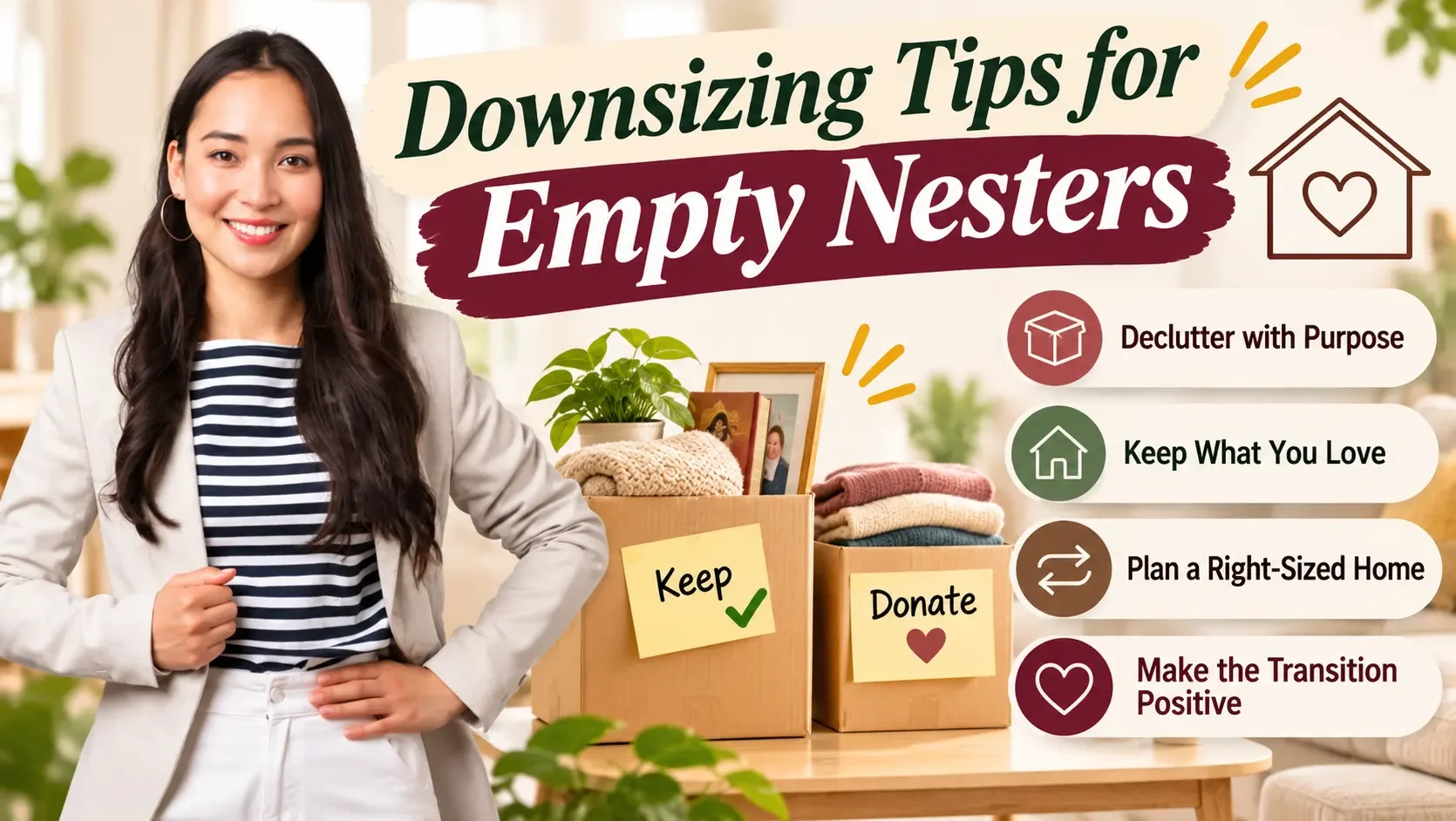
Whether you're preparing to move into a smaller home or simply want to simplify the home you already own, these downsizing tips for empty nesters can help you approach the process with greater confidence and less stress.
Step 1: Donate, Discard, and Evaluate Your Belongings Before Moving
One of the most important downsizing tips for empty nesters is to begin decluttering while you're still living in your current home.
Waiting until you've moved into a smaller space to decide what to keep can create unnecessary work, expense, and frustration. You may end up packing, transporting, and unpacking belongings that ultimately need to be donated or discarded.
I've written before about the frustration of paying movers to transport boxes only to discover later that you no longer need what is inside them.
Decluttering before moving saves time, reduces moving expenses, and makes organizing your new home much easier.
Start by evaluating what you currently own. Consider which belongings you use regularly, which have sentimental value, and which no longer serve your lifestyle.
For empty nesters, this often includes furniture from children's bedrooms, duplicate kitchen supplies, outdated electronics, accumulated paperwork, and belongings stored in closets or garages for years.
You may also discover items your adult children left behind. Rather than assuming they want everything saved indefinitely, have conversations about which possessions they would genuinely like to keep.
Give yourself time to make thoughtful decisions, especially when sorting sentimental belongings. Some items deserve careful consideration, while others can be donated or discarded without much hesitation.
The goal is not to eliminate everything associated with your family home. It is to preserve what matters while releasing belongings that no longer have a meaningful place in your life.
Beginning this process early allows you to move forward gradually rather than rushing through decisions under the pressure of an approaching moving date.
Downsizing in your current home also creates physical and emotional space for the next chapter, making the transition feel more intentional and manageable.
Step 2: Visualize Your New Home and Set Your Intention
Before beginning a major downsizing project, take time to imagine how you want your next home and lifestyle to look.
In yoga, there is a concept called Sankalpa, which refers to setting an intention or personal resolution. This idea aligns closely with Marie Kondo's recommendation to envision your ideal lifestyle before beginning the decluttering process.
Both approaches encourage you to think about what you want to create rather than focusing exclusively on what you need to remove.
Imagine walking into your new home. How do you want it to feel? Perhaps you envision a lighter, simpler space with fewer responsibilities and more room to enjoy your interests.
Maybe you want a smaller kitchen that's easier to maintain, a comfortable guest room for visiting grandchildren, or a peaceful living area without unnecessary furniture and belongings.
You may also want to reduce the time spent cleaning, maintaining, and organizing so you can focus on travel, hobbies, family, or other activities you enjoy.
Keep this vision in mind as you evaluate your possessions.
Instead of asking only whether an item still has value, consider whether it fits the home and lifestyle you're creating.
A large dining table may have been perfect when your children were growing up, but a smaller table might better suit your current needs. Extra bedroom furniture, recreational equipment, or duplicate household items may no longer serve the same purpose they once did.
Of course, downsizing doesn't necessarily mean moving into a smaller home. Many empty nesters choose to remain where they are while reducing the number of belongings they own and simplifying their living spaces.
Downsizing is about more than reducing square footage. It is about creating a home that reflects who you are today and how you want to live in the years ahead.
At The Uncluttered Life, we encourage clients to focus on their ideal lifestyle before making major decisions about what to keep, donate, sell, or discard.
When you have a clear vision of your next chapter, the process of letting go becomes more purposeful and less overwhelming.
Step 3: Avoid Putting Unnecessary Belongings in Storage
One of the biggest mistakes people make when downsizing is renting a storage unit for belongings that will not fit into their new home. Although temporary storage may sometimes be necessary, storing excess possessions often postpones difficult decisions rather than solving the underlying problem.
The KonMari Method® encourages gathering belongings by category so you can see how much you actually own before deciding what to keep. This approach is particularly helpful when preparing to move into a smaller home.
Before placing items in storage, ask yourself why you decided to downsize in the first place. Was it to simplify your lifestyle, reduce household responsibilities, or eliminate the expense and maintenance associated with a larger home?
If your goal is to live with less, paying to store belongings you rarely use may work against that intention.
Storage units also create ongoing expenses, and items placed inside can remain untouched for years. Over time, the cost of storing belongings may exceed their replacement value.
Of course, temporary storage can be useful during a move, renovation, or major life transition. The important distinction is whether storage serves a specific purpose or simply allows you to avoid making decisions.
Downsizing is an opportunity to evaluate what deserves a place in your next chapter, not simply relocate everything you already own.
Step 4: Follow the KonMari Method® and Downsize by Category
Rather than decluttering one room at a time, consider using the KonMari Method® to evaluate your belongings by category.
The method follows a specific sequence: clothing, books, papers, komono (miscellaneous items), and finally sentimental belongings.
Working through these categories helps you recognize how much you own and makes it easier to identify duplicates, unnecessary items, and possessions that no longer serve your lifestyle.
For example, if you're downsizing from a home with three bathrooms to one with two, gather toiletries, towels, cleaning supplies, and other bathroom essentials from throughout the house. Seeing everything together makes it easier to determine what you genuinely need.
The same principle applies to home offices. If your current home has a dedicated office with multiple desks, filing cabinets, and storage shelves, but your new home will have a smaller workspace, you may need to reconsider how much office furniture and equipment to keep.
Gather similar items together, evaluate what you use regularly, and consider whether the remaining belongings will fit comfortably within your new space.
As a Master KonMari Consultant and professional organizer at The Uncluttered Life, I appreciate the structure this method provides. However, downsizing should also reflect your individual needs, schedule, and emotional readiness.
Some people benefit from the traditional category-based sequence, while others make better progress by addressing specific rooms or areas first.
The goal is to reduce unnecessary belongings before deciding how to organize what remains.
Step 5: Make Room for Your New Life
Downsizing can initially feel like giving something up. You may be leaving a larger home, parting with furniture you've owned for decades, or adjusting to rooms that serve different purposes than they once did.
I encourage clients to look at this transition from another perspective. Downsizing is also an opportunity to create a home that better supports the life they want to live now.
Rather than trying to fill every room or recreate the exact layout of your previous home, allow some areas to remain open. Empty space is not necessarily wasted space. It provides flexibility, improves movement throughout the home, and makes rooms feel less crowded.
Multifunctional rooms can be especially useful when moving into a smaller home. A guest bedroom might also serve as a home office, while a dining area could provide occasional workspace for paperwork or hobbies.
The key is creating clearly defined functions within each shared space. Furniture should serve a purpose, and everyday belongings should have designated storage locations.
Before purchasing additional furniture or organizing products, spend time living in your new home. You may discover that your needs are different from what you initially imagined.
For empty nesters, this can be an exciting opportunity to rethink how rooms are used. A former playroom might become a reading room, an exercise space, or a comfortable retreat for visiting grandchildren.
Your home should reflect the way you live today, not simply preserve the way you lived twenty years ago.
Step 6: Practice Gratitude and Embrace Your Next Chapter
Downsizing a family home can bring up a wide range of emotions. Even when you're excited about moving, it can be difficult to leave the place where you raised children, celebrated holidays, and created years of meaningful memories.
Practicing gratitude and appreciation can offer a thoughtful way to approach this transition.
Take time to acknowledge what your family home has provided. Remember the birthday celebrations, family dinners, school mornings, holiday gatherings, and ordinary moments that made the house feel like home.
You might even thank your home for the role it played in your family's life.
Then begin turning your attention toward the opportunities ahead.
Perhaps your next home will require less maintenance, offer a more convenient layout, or allow you to spend more time traveling, pursuing hobbies, and enjoying family.
It is natural to experience moments of sadness or uncertainty while making these changes. Leaving a familiar environment and parting with meaningful belongings can be emotional, even when the decision to downsize is a positive one.
Allow yourself to appreciate the past without feeling obligated to preserve every physical reminder of it.
Photographs, a few treasured family heirlooms, and meaningful keepsakes can preserve important memories without requiring you to keep everything accumulated over the years.
At The Uncluttered Life, we believe that downsizing is not simply about reducing square footage or getting rid of possessions. It is about making thoughtful decisions that support your current lifestyle and future goals.
When approached gradually and intentionally, downsizing can become an opportunity to simplify everyday responsibilities, create more functional living spaces, and welcome a new stage of life.
The memories remain, even when the belongings and the address change.