

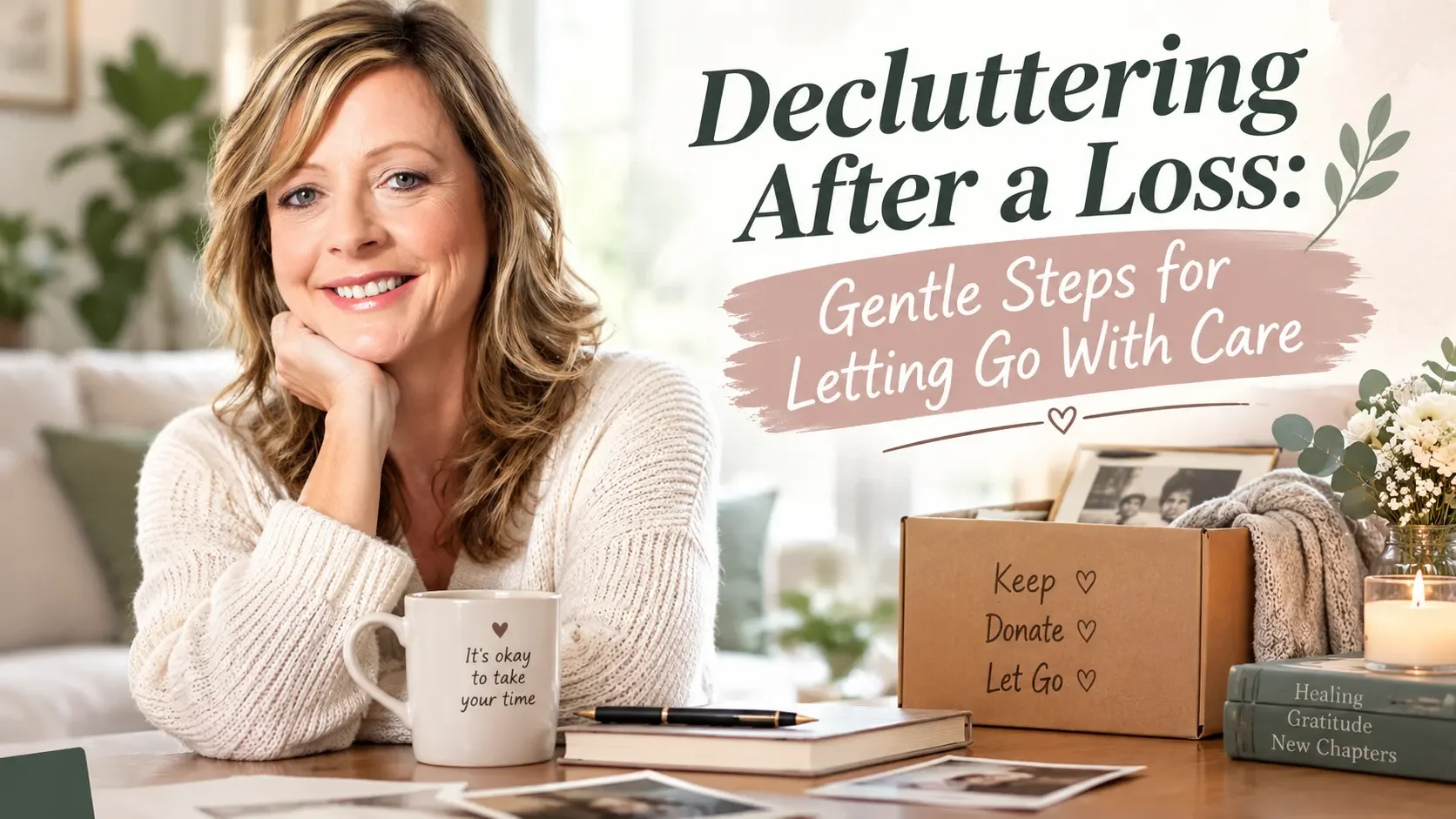
Decluttering after a loss is unlike almost any other kind of organizing. The belongings left behind are more than ordinary household possessions. They may represent a person you loved, a relationship you cherished, and a lifetime of shared memories. Sorting through these items can bring up grief, sadness, guilt, comfort, confusion, and exhaustion, sometimes all within the same afternoon.
There is no single right way to approach this process, and there is no universal timeline for when you should begin. Decluttering after a loss involves both emotional and practical considerations, and the balance between them will look different for every person and family. Some people find comfort in preserving familiar surroundings, while others feel ready to begin sorting through belongings sooner.
Even when the process feels deeply personal, practical responsibilities may create additional pressure. You might need to prepare a home for sale, meet the requirements of a lease, settle an estate, or coordinate decisions with other family members. These circumstances can make an already difficult experience feel even more overwhelming, particularly when you are trying to make thoughtful decisions while grieving.
At The Uncluttered Life, we believe that organizing after a loss should be approached with patience, compassion, and respect for the memories connected to personal belongings. Our Declutter Deck® provides structured home decluttering prompts that may help with straightforward organizing tasks when you feel ready. However, no organizing system should determine your emotional timeline or pressure you to make decisions about meaningful possessions before you are comfortable doing so.
The goal is not to erase the past or remove every reminder of someone you loved. It is to find a thoughtful way to manage their belongings while honoring their memory and caring for yourself throughout the process.
There Is No Required Waiting Period
One of the most common questions people ask is how long they should wait before decluttering after the death of a loved one. Although friends and family members may offer advice about when to begin, there is no universally appropriate waiting period. Grief affects people differently, and the right time to sort through belongings depends on your circumstances, emotional readiness, and practical responsibilities.
Some people prefer to leave a loved one's belongings untouched for a period of time because the familiar surroundings provide comfort. Others may find that gradually organizing personal possessions helps them adjust to their loss. Neither approach is inherently better, and there is no need to measure your progress against someone else's experience.
In certain situations, you may not have the option of waiting until you feel fully ready. A home may need to be sold, a lease may be ending, or legal and financial responsibilities may require decisions about household possessions. When these deadlines arise, focus on identifying which tasks genuinely need immediate attention and which decisions can be postponed.
If time is limited, consider separating urgent practical tasks from emotionally difficult decisions. Important documents, financial records, valuables, and items related to estate administration may need to be identified early. Other belongings, particularly sentimental possessions, may be safely stored for later consideration when circumstances allow. Before selling, donating, or distributing estate property, confirm that you have the necessary legal authority and that any relevant estate requirements have been addressed.
You may also benefit from asking a trusted friend, family member, or professional organizer to help with practical tasks. Having someone assist with packing, sorting, or managing logistics can reduce the number of responsibilities you need to handle alone while giving you space to process your emotions.
Remember that grief does not follow a predictable schedule. You may feel comfortable making certain decisions one day and find similar choices difficult another day. Give yourself permission to work at a pace that respects both your emotional needs and the practical circumstances you are facing.
Keep the Connection, Not Everything
One of the most emotional aspects of decluttering after a loss is deciding which belongings to preserve. Everyday objects can take on profound significance because they remind you of the person who owned them. A favorite sweater, a handwritten recipe, a well-worn book, or a simple household item may bring back memories that feel especially precious after someone dies.
It can be difficult to separate the meaning of a relationship from the physical possessions associated with it. You may worry that donating an item will somehow diminish your connection to the person you loved or that letting go of their belongings means forgetting important memories. These feelings are understandable, particularly when you are still adjusting to the absence of someone who played a meaningful role in your life.
However, preserving a connection does not necessarily require keeping every possession. You may find that a carefully chosen collection of meaningful belongings provides more comfort than storing an entire household of items you cannot realistically maintain. For some people, selecting a few treasured keepsakes makes memories easier to revisit and appreciate.
Consider choosing belongings that evoke meaningful experiences or reflect the person's personality. A handwritten note may preserve the sound of their familiar expressions, while a favorite piece of clothing might provide comfort. Photographs, recipes, letters, jewelry, and small personal objects can also become meaningful reminders of shared experiences.
You may also want to preserve memories in ways that do not require keeping every physical item. Photographing larger objects, recording family stories, creating a memory book, or sharing selected belongings with relatives can provide thoughtful alternatives. However, there is no obligation to replace physical keepsakes with photographs or to limit yourself to a particular number of sentimental possessions.
Some belongings may bring comfort immediately, while others may feel painful or difficult to evaluate. It is reasonable to set certain items aside and revisit them later. You do not need to make permanent decisions about every possession during a single organizing session.
Letting go of an object does not mean letting go of the person, the relationship, or the love you shared. The memories and connections that matter most are not measured by how many belongings you keep.
Action Steps for Decluttering After a Loss
Decluttering after the death of a loved one involves practical responsibilities as well as emotional decisions. Some tasks may need immediate attention, while others can wait until you feel more comfortable making them. These six steps can help you approach the process thoughtfully while respecting your own grief and the needs of other family members.
Consider Removing Medical Equipment and Supplies When You Feel Ready. If a surviving spouse or family member continues living in the home, medical equipment and supplies may serve as painful reminders of a loved one's final illness. Some people find comfort in removing these items relatively soon so their home feels less connected to caregiving and more connected to happier memories. Others may need additional time, and that is perfectly reasonable. Begin by identifying rented equipment that needs to be returned and medications or medical supplies that require appropriate disposal. Keep anything still needed by another household member, and follow local disposal guidelines for medications and medical equipment.
Avoid Family Conflicts Over Belongings. Grief affects everyone differently, and disagreements about possessions may reflect emotions that extend far beyond the items themselves. A seemingly ordinary object might hold tremendous sentimental value for one family member while appearing insignificant to another. Listen to each person's perspective, avoid making assumptions about what something means to them, and try not to turn difficult decisions into arguments. When disagreements arise, consider setting the item aside until everyone has had an opportunity to discuss it calmly. Remember that estate instructions and legal ownership must also be respected.
Organize Estate Documents and Clarify Responsibilities. Having a current will, trust, or estate plan can help reduce uncertainty about how belongings should be distributed after a death. If you are planning for your own future, consider documenting your wishes for meaningful possessions and discussing them with loved ones when appropriate. When settling someone else's estate, locate important documents, identify the person legally authorized to manage the property, and clarify which responsibilities belong to each family member. Avoid distributing, donating, or selling estate belongings until you have confirmed the applicable legal requirements. Clear communication and written records can help prevent misunderstandings during an already emotional time.
Donate or Share Belongings Thoughtfully. Donating usable household items or offering meaningful possessions to friends and relatives can be a thoughtful way to give them a new purpose. However, avoid assuming that others want or have room for everything you hope to pass along. Offer a few specific items and allow recipients to decline without feeling guilty. Some family members may appreciate a sentimental keepsake, while others may prefer photographs or memories rather than additional physical belongings. Contact donation organizations before delivering large quantities of items to confirm what they accept. The goal is to pass belongings along with care rather than transferring unwanted clutter to someone else.
Ask for Help and Establish a Manageable Plan. Sorting through a loved one's belongings can be physically and emotionally exhausting, particularly when an entire household needs attention. You do not have to complete the process alone. Trusted friends, relatives, and professional organizers can assist with packing, sorting, transportation, and other practical responsibilities. Begin by identifying what needs to be accomplished, which tasks are most urgent, and who will be responsible for each step. If there are estate, housing, or moving deadlines, create a realistic timeline that accounts for them while allowing additional time for emotionally difficult decisions. Professional assistance can be especially valuable when family members live far apart or the amount of work feels overwhelming.
Use Temporary Storage With a Clear Purpose. In some circumstances, renting a storage unit may be necessary, particularly when a home must be sold, a lease is ending, or family members need additional time to make decisions about meaningful belongings. Temporary storage can provide breathing room, but it is important to avoid allowing it to become a permanent solution for postponed decisions. Before renting a unit, consider the cost, the amount of storage genuinely needed, and which belongings require additional time for evaluation. Establish a reasonable date to revisit the contents and review the arrangement periodically. A flexible plan can help prevent ongoing storage expenses while giving you the space to make thoughtful decisions.
Decluttering after a loss is not about completing the process as quickly as possible or removing every reminder of someone you loved. It is about balancing practical responsibilities with emotional readiness, preserving meaningful memories, and making decisions that respect both the person who has died and those who remain.
Give yourself permission to grieve, ask for support, and move forward one manageable decision at a time. There is no perfect timeline for letting go, and the love you shared is not measured by the belongings you keep.