

How to Save Money on Groceries Without Sacrificing Nutrition

Of all the places you can find extra money in your monthly budget, the grocery store is one of the fastest and most effective. Unlike fixed expenses, your grocery bill is flexible. With a little intention and a simple system, most families can trim their spending significantly without giving up the quality, nutrition, or convenience they care about.
The good news is that you do not need a coupon binder or a complicated spreadsheet. You need a plan. Start small: commit to planning just three meals a week and build from there.
The Most Common Grocery Mistakes (and How to Stop Making Them)
Before building a better system, it helps to know what is quietly draining your grocery budget right now. The most common culprits are shopping too often, skipping meal planning, throwing away food that goes unused, not checking prices across stores, shopping without a list, and filling in the gaps with takeout.
Most of these mistakes have the same root cause: going to the store without a clear plan. When you shop without a list, you buy without intention. When you buy without intention, food goes to waste. When food goes to waste, you spend more. The cycle is easy to break once you see it clearly.
Get Intentional Before You Shop
The first step in saving money on groceries is deciding what actually matters to your household. What are your nutrition priorities? What is your realistic weekly budget? What are your non-negotiable items your family genuinely will not go without?
Getting clear on these questions before you set foot in a store changes everything. It shifts grocery shopping from a reactive errand to a deliberate decision. That shift alone is where most of the savings come from.
This same principle applies to the rest of your home. When you are intentional about what you own and why, you spend less and waste less across the board. Our post on saving money on groceries and consumer spending habits explores this connection in more depth.



Build Your Family's Meal Plan
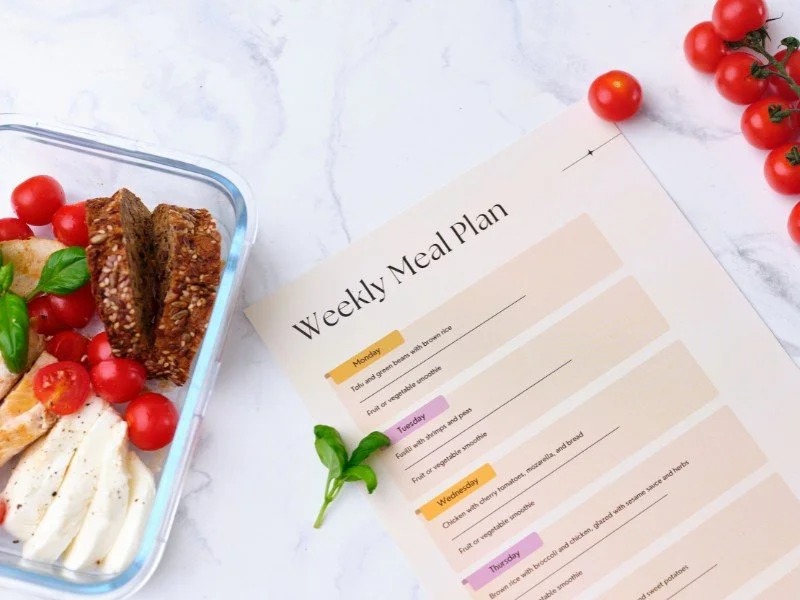
A meal plan does not have to be elaborate. It just has to exist.
Start by writing down 10 meals your family reliably likes and will actually eat. Think approachable, flexible recipes: spaghetti, stir fry, BBQ chicken, tacos, lasagna, soup, pesto pasta, burrito bowls. These are the meals that form the backbone of an efficient grocery list because you already know the ingredients, you know the prep time, and you know nobody will complain.
From that list of 10, plan three to five meals per week. Build your grocery list around exactly what those meals require. Nothing more, nothing less.
Choose recipes that share ingredients where possible. A rotisserie chicken can anchor three different meals across the week. A bag of spinach works in a stir fry, a pasta dish, and a side salad. Ingredient overlap is one of the simplest ways to reduce both spending and food waste at the same time.
Stock Up on Long-Lasting Produce
Fresh produce is where most grocery budgets quietly leak. You buy it with good intentions and then watch it go bad before you get to it.
The solution is not to stop buying produce. It is to shop smarter within the produce section. Some items hold up much longer than others: romaine lettuce, carrots, Brussels sprouts, oranges, apples, and grapefruit can all last a week or more with proper storage. Building meals around these longer-lasting options means less waste and more nutritional value for your dollar.
For items that are close to turning, freeze them before they spoil. Bananas, berries, spinach, and cooked grains all freeze well and stay usable for months. According to the USDA, American families throw away between 30 and 40 percent of the food they purchase. Freezing is one of the single most effective ways to close that gap. (Source: USDA)
Use the SHOP Method
When you are ready to build a consistent grocery routine, the SHOP method gives you a simple framework to follow every time.
Shop your house first. Before you write a single thing on your list, look at what you already have. Check the pantry, the freezer, and the refrigerator. Build meals around what is already there before buying anything new.
Have a spending plan and a meal plan. Know your budget before you walk in. Know your meals before you walk in. These two things together eliminate most impulse spending.
Order online when it helps. Grocery pickup and delivery remove the temptation of in-store browsing. If impulse buys are a pattern for your household, ordering online can be one of the most effective changes you make.
Prepare meals that work for your family. Healthy eating and picky eaters can coexist. When you plan meals around foods your family already likes and prepare them in ways that are familiar, you are far less likely to abandon the plan and order takeout.
A Simpler Grocery Routine Starts This Week
You do not have to overhaul everything at once. Pick one change from this list and practice it for two weeks. Plan three meals. Make one grocery list. Freeze what you would otherwise throw away.
Small, consistent actions are what create lasting change. That is true of your grocery budget and of your home. If you are working on reducing spending and waste across your household, the Declutter Deck® brings that same one-step-at-a-time approach to your physical space. Small prompts. Real progress. Lasting calm.
Shop the Declutter Deck® at lifehackdecks.com and Delegate to the Deck®.