

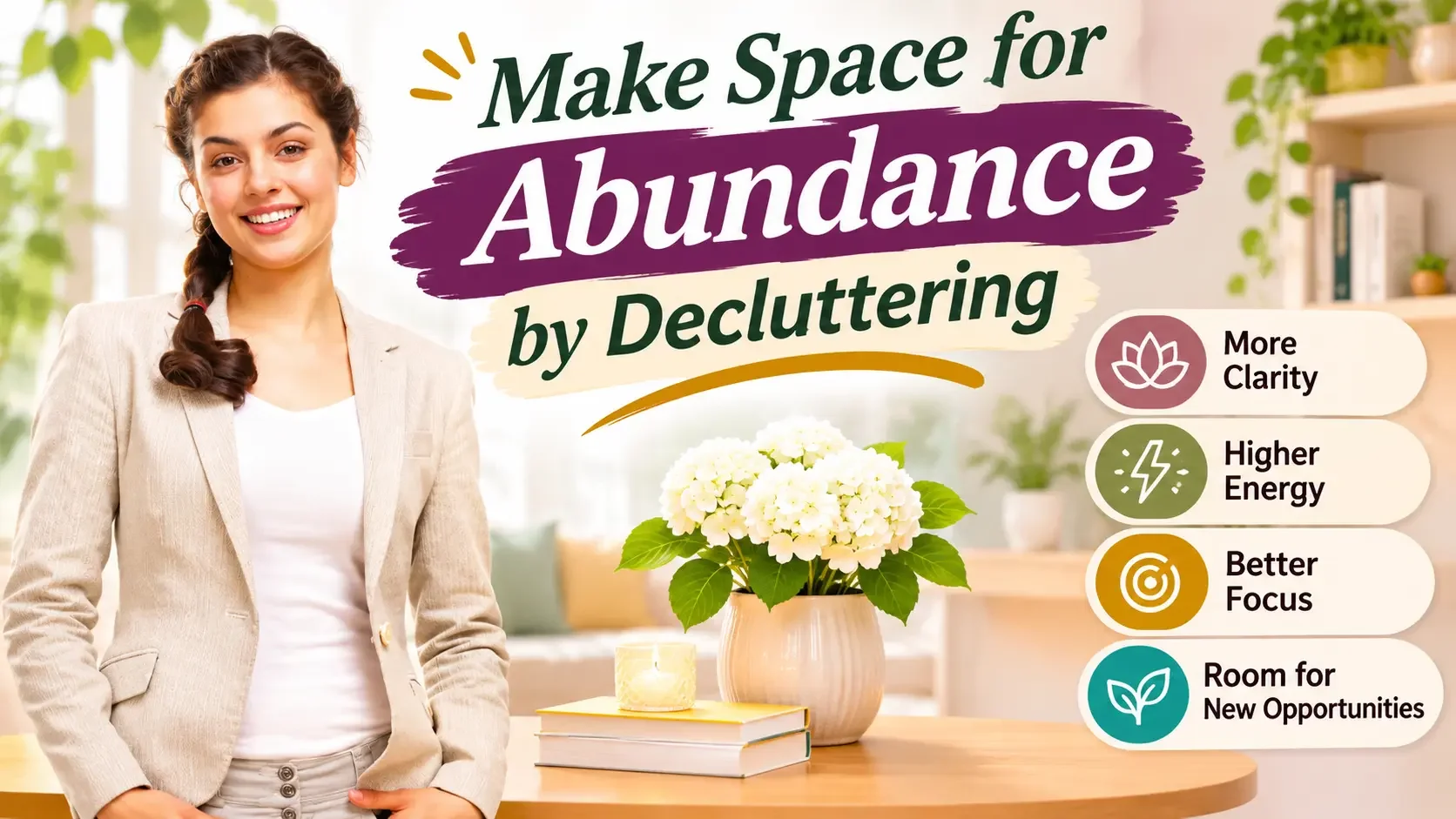
When you make space for abundance by decluttering, you change more than the appearance of your home. Removing unnecessary belongings can create a greater sense of clarity, calm, and possibility. A more organized environment may help you feel less overwhelmed and better able to focus on the things that matter most.
There is something liberating about knowing what you own and where everything belongs. When your home is filled with possessions you use, need, and love, everyday routines become easier to manage. Instead of constantly searching for misplaced items or dealing with overcrowded spaces, you have more time and attention for meaningful activities.
Decluttering can also encourage personal reflection. As you sort through belongings, you may revisit memories, reconsider priorities, and recognize which possessions no longer support the life you want to live.
In yoga and other spiritual traditions, people sometimes describe this experience as a shift in energy. Releasing unnecessary belongings can symbolize letting go of the past and creating room for new experiences.
Although the idea that objects carry measurable spiritual energy is a matter of personal belief, the feeling of relief that can accompany decluttering is meaningful to many people.
At The Uncluttered Life, we believe that creating a more organized home is not simply about having fewer possessions. It is about making thoughtful decisions that support your lifestyle and help you enjoy your surroundings.
Why Decluttering Is Believed to Clear Stagnant Energy
In traditional Feng Shui, the ancient Chinese practice of arranging spaces to encourage balance and harmony, clutter is often associated with stagnant energy.
According to these principles, energy, known as chi or qi, should move freely throughout a home. Excess belongings, overcrowded furniture, and blocked pathways are believed to interfere with that flow.
When you make space for abundance by decluttering, you are symbolically removing obstacles and allowing your surroundings to feel more open and balanced.
While the movement of chi is a traditional philosophical concept rather than a scientifically established physical process, the practical benefits of clearing crowded spaces can still be appreciated.
Think about how a room feels when furniture blocks walkways, countertops are covered with belongings, or closets are packed so tightly that finding anything becomes difficult.
Now imagine removing unnecessary items, opening the pathways, and giving everyday possessions designated storage locations.
The room may feel larger, more comfortable, and easier to navigate. Natural light becomes more noticeable, surfaces are easier to clean, and the space can feel more welcoming.
For many people, these changes create a sense of relief and renewed motivation.
Creating space for abundance does not mean filling your home with more. It means allowing the belongings that truly matter to have room to breathe.
Align Your Internal and External Environments
Our surroundings can influence how we feel and function throughout the day. When a home is filled with unfinished projects, misplaced belongings, and overcrowded storage areas, those things can become constant reminders of responsibilities that still need attention.
Physical clutter and mental clutter sometimes reinforce one another. When we feel overwhelmed, keeping up with household organization can become more difficult. As belongings accumulate, the environment may feel increasingly stressful.
Research suggests an association between how people perceive their homes and their stress levels. A UCLA study examining household clutter and cortisol patterns found that women who described their homes as cluttered or unfinished tended to exhibit less favorable daily cortisol patterns than those who described their homes as restful.
Although this does not establish that clutter directly causes stress in everyone, it suggests that our experiences of our living environments may be connected to emotional well-being.
Decluttering provides an opportunity to address some of the physical distractions that compete for our attention.
As you evaluate your belongings, consider how each space supports your daily routines. Does your bedroom encourage relaxation? Is your kitchen arranged to make cooking easier? Can you work comfortably in your home office without constantly moving unnecessary items?
When your surroundings reflect your needs and priorities, everyday activities may feel more manageable.
The goal is not to create a perfectly minimalist home. It is to develop a living environment that feels comfortable, functional, and aligned with the way you want to live.
Making space for abundance by decluttering begins with recognizing what supports your life today and releasing what no longer serves a meaningful purpose.
Decluttering Is a Meaningful Form of Self-Care
Decluttering can be a valuable form of self-care because it encourages you to make decisions that improve your everyday living environment.
However, getting started can feel overwhelming, particularly when belongings have accumulated over many years or carry emotional significance.
There is no single right way to declutter. Some people prefer to organize by category, while others find it easier to begin with one room, drawer, or small area at a time.
Choose an approach that feels manageable and allows you to make progress without becoming discouraged.
If you are unsure where to begin, our Declutter Deck®, available through our sister brand, Hack Decks®, offers a practical way to get started.
Created by the professional organizers behind The Uncluttered Life, Declutter Deck® contains 52 prompt cards designed to break home decluttering into smaller, more manageable tasks.
Simply choose a card, follow the prompt, and focus on one area at a time. As you continue through the deck, small accomplishments can build confidence and help establish consistent organizing habits.
Decluttering can also bring unexpected emotions to the surface.
A gift from an old friend may remind you of a relationship that has changed. Family photographs can bring back memories of meaningful experiences. Clothing or household items may represent an earlier stage of life that no longer reflects who you are today.
These connections can make decisions more difficult, but they also create opportunities for reflection.
You may choose to keep an item because it holds genuine meaning. You may decide to photograph it before donating it, or simply acknowledge its place in your life and let it go.
Some people find it helpful to practice gratitude during this process. Thanking an object for the purpose it once served, as encouraged in the KonMari Method®, can provide a thoughtful way to acknowledge the past while moving forward.
Decluttering does not mean erasing memories or disconnecting from important experiences. It means deciding which belongings deserve space in your present life.
At The Uncluttered Life, we encourage clients to approach this process with patience and realistic expectations. Not every decision needs to be made immediately, and not every sentimental item needs to be discarded.
Self-care is not always about adding something new to your life. Sometimes, it begins with letting go of what you no longer need.
Your Home Should Be a Place of Happiness and Peace
Your home provides shelter, comfort, warmth, and security. It is where you rest, build relationships, create memories, and experience everyday life. Decluttering and organizing your home are ways of caring for that space and appreciating everything it provides.
When unnecessary belongings are removed and everyday items have designated places, your home can become easier to maintain and more enjoyable to live in. Clear surfaces, functional storage, and thoughtfully arranged rooms help create an environment that feels comfortable rather than overwhelming.
A calm, organized home may also support emotional well-being by reducing visual distractions and the frustration of managing excess belongings. When your surroundings reflect your needs and priorities, everyday decisions can feel easier and routines more manageable.
At The Uncluttered Life, we believe your home should support the way you live. It does not need to be perfectly organized or completely free of clutter to feel welcoming.
The goal is to create a home filled with belongings you use, need, and love, while leaving room to enjoy the life happening around you.
Where and How to Begin Decluttering
Getting started can feel overwhelming, especially when belongings have accumulated over many years. Fortunately, there is no single correct way to declutter your home.
Some people prefer to work room by room, beginning with the area that causes the most frustration. Others find it easier to organize by category, gathering similar belongings together before deciding what to keep.
You can also make meaningful progress by decluttering in smaller increments. Start with one drawer, a kitchen cabinet, or a cluttered countertop. Completing a manageable task can provide the motivation needed to tackle another area.
For those who struggle with deciding where to begin, our Declutter Deck® offers a practical solution. Created by the professional organizers behind The Uncluttered Life, this set of 52 decluttering prompt cards helps break larger organizing projects into smaller, achievable tasks.
Simply pull a card, follow the prompt, and focus on one area at a time. Over time, these small accomplishments can build confidence and help establish organizing habits that prevent clutter from accumulating again.
Remember that consistency matters more than speed. You do not have to declutter your entire home in a weekend to experience the benefits of a more functional living space.
Making space for abundance by decluttering begins with one thoughtful decision, followed by another.
Final Thoughts on Making Space for Abundance
Decluttering is about more than reducing the number of possessions in your home. It is an opportunity to evaluate what truly matters, simplify everyday responsibilities, and create an environment that reflects your priorities.
There is also something meaningful about donating belongings you no longer need. Clothing, furniture, household items, and other usable possessions may find new purpose in someone else's home. What no longer serves your lifestyle could be genuinely valuable to another person.
For many people, letting go of excess belongings creates a sense of relief and renewed appreciation for what remains. With fewer unnecessary items competing for attention, it may become easier to focus on relationships, meaningful experiences, and personal goals.
In Feng Shui and other spiritual traditions, creating space is often associated with welcoming positive energy and new opportunities. Whether you embrace these beliefs or simply appreciate the practical benefits of an organized home, decluttering can encourage a more intentional approach to everyday life.
At The Uncluttered Life, we believe that making space for abundance by decluttering is not about having less for the sake of having less. It is about creating more room for the things that truly matter.
You do not need to achieve perfection or part with every sentimental possession. Begin with what feels manageable, make thoughtful decisions, and develop habits that help maintain your progress.
As your surroundings become easier to manage, you may discover that abundance has less to do with what you own and more to do with the time, freedom, and peace you create for yourself.
Make space for what matters. Let go of what no longer serves you. And remember that small steps, done consistently, create big results.